
I keep doing something
QRoo Paul Video: https://www.youtube.com/watch?v=iOq88tOGA0k
This version of where you ‘keep doing something’ is about the “in the moment / ongoing right now” feeling — seguir + gerund has that sense of something still in motion, still happening. It’s not just a habit, it’s currently unresolved.
The set phrase:
Seguir + gerund
To keep doing something.
Gerund: -ando / -iendo
I keep doing something
I keep studying.
Sigo estudiando.
I keep practicing Spanish.
Sigo practicando español.
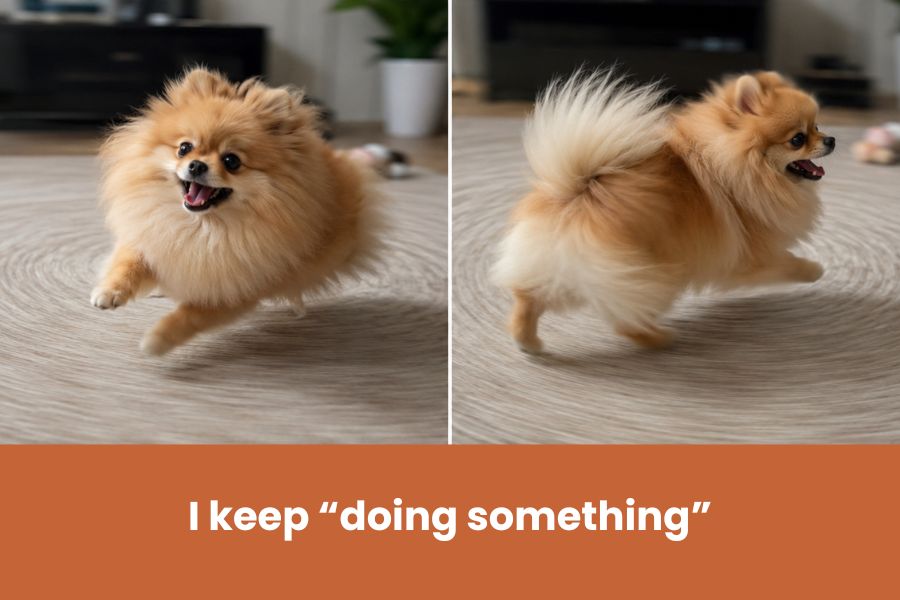
Yogi keeps running in circles.
Yogi sigue corriendo en círculos.
seguir: third person is sigue
I keep thinking about what you said.
Sigo pensando en lo que dijiste.
I keep thinking about what happened yesterday.
Sigo pensando en lo que pasó ayer.
“Pensar en” – to think about: pensar is always followed by ‘en’
“Lo que” (set phrase) is what when what is not a question but the thing you’re talking about.
I keep thinking about WHAT you said.
I keep getting the words horse and onion mixed up.
Sigo confundiendo las palabras caballo y cebolla.
- Or you can use the accidental se form
Se me siguen confundiendo las palabras caballo y cebolla.
The words horse and onion keep getting confused on me.
Accidental se
I keep forgetting the little spanish words (when I’m talking to Edna)
Sigo olvidando las palabras pequeñas.
Why not accidental se?
‘Damn I forgot my keys’ is an accidental moment.
“Sigo olvidando” is about the continuation of the action, not of the action itself.
So the focus is on seguir, not olvidar.
Reflexive
I keep wondering if I should travel somewhere closer to home.
Sigo preguntándome si debería viajar a algún lugar más cerca de casa.
Preguntarse
Preguntando (gerund) / me (reflexive pronoun)
Subjunctive
I keep waiting for the other shoe to drop.
Sigo esperando que caiga el otro zapato.
- The structure flips to esperar que, subjunctive trigger
- Second clause uses the subjunctive – caiga is the subjunctive of caer.
Indirect Object
I keep telling my son that he has a hole in the back of his shirt, but he doesn’t (wink)
Sigo diciéndole a mi hijo que tiene un agujero en su camiseta, pero él no.
Diciendo/le
Decir gerund – diciendo + (redundant) LE
I keep trying to give Juan a letter but he won’t take it.
Sigo intentando darle una carta a Juan, pero él no la acepta.
Dar/le
The pronoun stacks onto the verb that actually involves Juan (dar), not the outer verb.
Direct Object
I keep looking at the good looking guy in the cafe.
Sigo mirándolo al chico guapo en el café.
mirando/lo
Lo here is the direct object pronoun — masculine singular, replacing el chico.
Same lo as in “I see him” → lo veo.