
Easy Sentence Starters Plus B2 Combos

Taking Paul’s sentence starters I have upgraded them to a B1 level by introducing examples and exercises where the sentence has two clauses and a connector; sometimes triggering the subjunctive.

Easy Sentence Starters Plus B2 Combos
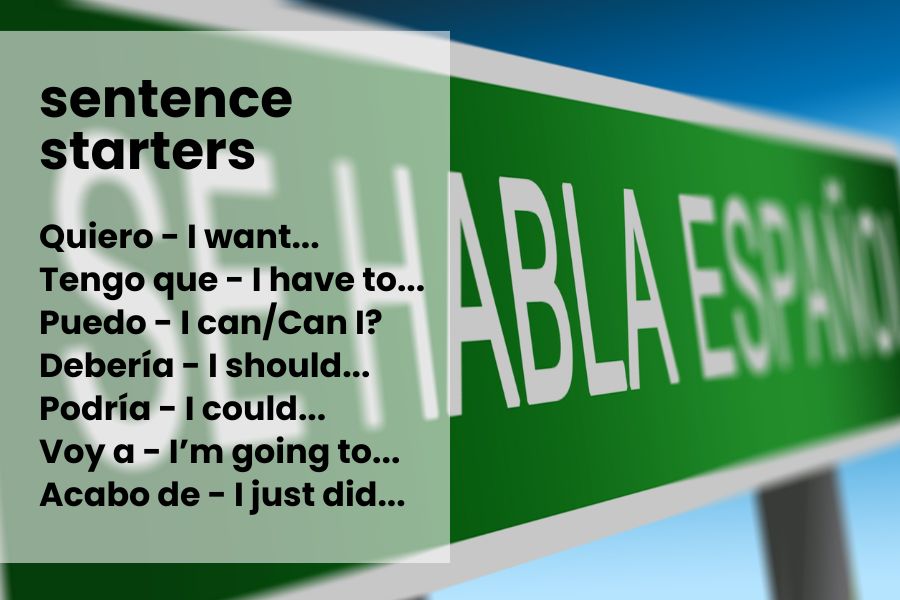
Quiero + infinitive – I want to
Tengo que + infinitive – I have to
Puedo + infinitive – I can / Can I…?
Debería + infinitive – I should
Podría + infinitive – I could
Voy a + infinitive – I’m going to
Acabo de + infinitive – I just did

Examples:

  • ¿Quieres comer? – Do you want to eat?
  • Tienes que estudiar. – You have to study.
  • ¿Puedes salir? – Can you go out?
  • Deberías dormir más. – You should sleep more.
  • Vas a levantarte temprano. – You’re going to get up early.
  • Acabas de acostarte. – You just went to bed.

Using Pronominal Verbs with “Te”

When you use tú as the subject, change the –se on pronominal verbs to te:

  • dormirse → dormirte → ¿Quieres dormirte? – Do you want to fall asleep?
  • acostarse → acostarte → Vas a acostarte. – You’re going to go to bed.
  • levantarse → levantarte → Tienes que levantarte. – You have to get up
  1. I want to sleep because I feel exhausted.
  2. I have to get up early to catch the bus.
  3. I can help you, so don’t worry.
  4. I should call my friend because it’s her birthday.
  5. I could go later if the weather improves.
  6. I’m going to clean the kitchen so we can cook.
  7. I just got dressed, that’s why I’m ready now.

Answers:

  1. I want to sleep because I feel exhausted.
    Quiero dormir porque me siento agotada (f)
  2. I have to get up early to catch the bus.
    Tengo que levantarme temprano para tomar el autobús.
  3. I can help you, so don’t worry.
    Puedo ayudarte, así que no te preocupes.
  4. I should call my friend because it’s her birthday.
    Debería llamar a mi amiga porque es su cumpleaños.
  5. I could go later if the weather improves.
    Podría ir tarde si el tiempo mejora.
  6. I’m going to clean the kitchen so we can cook.
    Voy a limpiar la cocina para cocinar. 
  7. I just got dressed, that’s why I’m ready now.
    Acabo de vestirme, por eso estoy lista ahora. (f)

Ready for translation:

  1. You want to leave because you’re tired.
  2. You have to call your boss to explain the situation.
  3. You can come with me, so you won’t be alone.
  4. You should take a jacket because it’s cold outside.
  5. You could stay here if you don’t feel well.
  6. You’re going to wash the dishes so we can eat.
  7. You just got home, that’s why you didn’t answer.

Answers:

  1. You want to leave because you’re tired.
    Quieres salir porque estás cansado.
  2. You have to call your boss to explain the situation.
    Tienes que llamar a tu jefe para explicar la situación.
  3. You can come with me, so you won’t be alone.
    Puedes venir conmigo, así que no estás solo.
  4. You should take a jacket because it’s cold outside.
    Deberías llevar una chamarra porque hace frío afuera.
  5. You could stay here if you don’t feel well.
    Podrías quedarte aquí si no te sientes bien.
  6. You’re going to wash the dishes so we can eat.
    Vas a lavar los platos para que podamos comer. (subjunctive)
  7. You just got home, that’s why you didn’t answer.
    Acabas de llegar a casa, así que no respondiste.

B1-style sentences using él / ella / usted, one for each of Paul’s 7 original sentence starters, all with:

  • A real-life verb
  • A purpose, cause, or result
  • Natural tone — useful in everyday situations
  1. He wants to stay home because he feels sick.
  2. She has to finish the report to meet the deadline.
  3. Can you wait a moment so we can check the results?
  4. You should drink more water because it’s hot today.
  5. He could call you later if he finishes early.
  6. She’s going to leave now so she can catch the train.
  7. You just spoke to him, that’s why he looks calmer.

Answers:

  1. He wants to stay home because he feels sick.
    Quiere quedarse en casa porque se siente enfermo.
  2. She has to finish the report to meet the deadline.
    Tiene que terminar el informe para cumplir con el plazo.
  3. Can you wait a moment so we can check the results?
    ¿Puede esperar un momento para que podamos comprobar los resultados? (usted, subjunctive)
  4. You should drink more water because it’s hot today.
    Debería tomar más agua porque hace calor hoy. (usted)
  5. He could call you later if he finishes early.
    Podría llamarte más tarde si termina temprano.
  6. She’s going to leave now so she can catch the train.
    Va a salir ahora para que pueda tomar el tren. (subjunctive)
  7. You just spoke to him, that’s why he looks calmer.
    Acaba de hablar con él, por eso parece más tranquilo.

Here’s a full set of B1-style sentences using nosotros, based on Paul’s 7 original sentence starters. Each one includes:

  • A new verb
  • A practical daily situation
  • A reason, purpose, or outcome

  1. We want to cook something simple because we’re tired.
  2. We have to clean the house to get ready for guests.
  3. Can we start now so we don’t finish too late?
  4. We should walk to the store because the car isn’t working.
  5. We could stay longer if the weather improves.
  6. We’re going to leave early to avoid traffic.
  7. We just finished eating, that’s why we’re not hungry.

Answers:

  1. We want to cook something simple because we’re tired.
    Queremos cocinar algo simple porque estamos cansados.
  2. We have to clean the house to get ready for guests.
    Tenemos que limpiar la casa para prepararnos para los invitados.
  3. Can we start now so we don’t finish too late?
    ¿Podemos empezar ahora para no terminar demasiado tarde?
  4. We should walk to the store because the car isn’t working.
    Deberíamos caminar a la tienda porque el carro no funciona.
  5. We could stay longer if the weather improves.
    Podríamos quedarnos más tiempo si el tiempo mejora.
  6. We’re going to leave early to avoid traffic.
    Vamos a salir temprano para evitar el tráfico.
  7. We just finished eating, that’s why we’re not hungry.
    Acabamos de comer, por eso no tenemos hambre.

set of B1-style sentences using ellos / ellas / ustedes, each one tied to one of Paul’s 7 original sentence starters. These include practical verbs, daily life contexts, and a reason, purpose, or outcome.


  1. They want to watch a movie because it’s raining.
  2. They have to wake up early to catch their flight.
  3. Can you all (plural) wait a bit so we can explain everything?
  4. They should bring jackets because it might get cold tonight.
  5. They could help us if they finish their work on time.
  6. You all are going to meet at the café to talk about the project.
  7. They just left the office, that’s why they’re not here yet.

Answers:

  1. They want to watch a movie because it’s raining.
    Quieren mirar una película porque está lloviendo.
  2. They have to wake up early to catch their flight.
    Tienen que despertarse temprano para tomar su vuelo.
  3. Can you all (plural) wait a bit so we can explain everything?
    ¿Pueden esperar un momento para que podamos explicar todo?
  4. They should bring jackets because it might get cold tonight.
    Deberían llevar las chamarras porque podría hacer frío esta noche.
  5. They could help us if they finish their work on time.
    Podrían ayudarnos si terminan su trabajo a tiempo.
  6. You all are going to meet at the café to talk about the project.
    Van a reunirse en el café para hablar sobre el proyecto.
  7. They just left the office, that’s why they’re not here yet.
    Acaban de salir de la oficina, por eso aún no llegan aquí.

entonces = “then” (sequencing)

así que = “so” (cause-effect)

🧠 responder – to answer, to respond

SpanishEnglish meaningUsage
respondisteyou answered / didn’t answer (once)preterite
respondíasyou used to answer / were answeringimperfect
hayas respondidoyou’ve answered (subjunctive)dependent clause trigger
responderíasyou would answerconditional
respondeanswer! (command)informal tú