
Verbs of Change
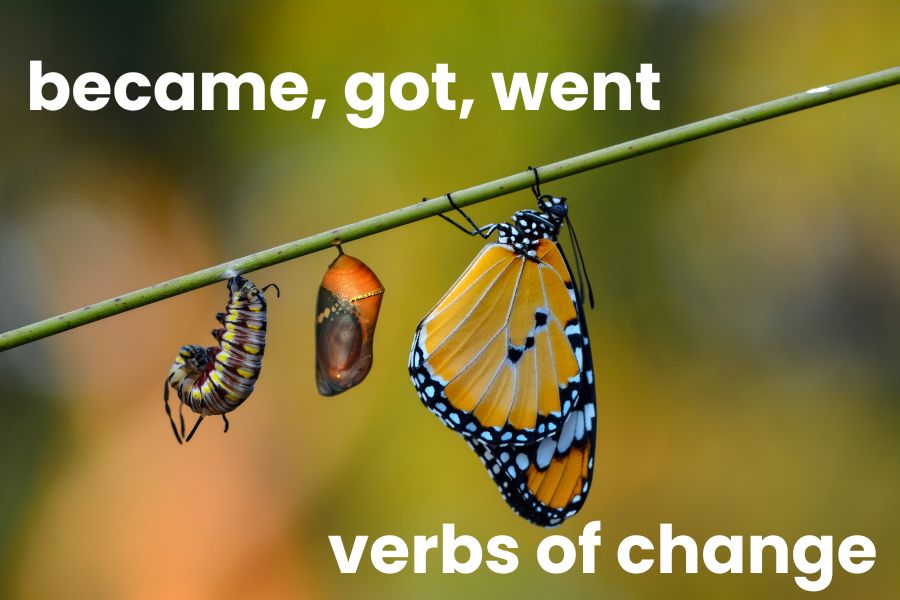
Verbs of Change: Became, Got, Went
Juan became a doctor.
Maria got mad.
Juan went crazy.
Verbs of Change: Ponerse, Volverse, Hacerse, Llegar a ser, Convertirse en, Quedar/Quedarse
Ponerse – feelings, emotions
Me puse nervioso antes del examen. – I got nervous before the exam.
Ella se puso contenta al ver a su amigo. – She was happy to see her friend.
Me puse enfermo después de la fiesta. → I got sick after the party.
Se puso celoso cuando vio a su novia con otro. → He got jealous when he saw his girlfriend with someone else.
Me puse cansado después de trabajar todo el día. → I got tired after working all day.
Nos pusimos nerviosos cuando el perro empezó a ladrar. → We got nervous when the dog started barking.
yo me puse
tú te pusiste
él/ella/usted se puso
nosotros nos pusimos
ellos/ustedes se pusieron
volverse – a change in character, attitude, or nature.
Think of ‘volverse’ as tied to ‘evolve’
Juan se volvió loco después del accidente. → Juan went crazy after the accident.
Se volvió muy desconfiado con la gente. → He became very distrustful of people.
Con los años, me volví más paciente. → Over the years, I became more patient.
Después de casarse, se volvió más responsable con el dinero. → After getting married, he became more responsible with money.
Desde que trabaja en ventas, se volvió muy hablador. → Since he started working in sales, he’s become really chatty.
Con la pandemia, mucha gente se volvió adicta a las compras en línea. → With the pandemic, a lot of people became addicted to online shopping.
Adicta is an adjective: adicta, casada, enferma → conditions / states
‘adicta’ is an unusual adjective because it doesn’t come from an infinitive verb.
- adicta → adjective.
There is a verb: adicarse doesn’t exist, but ser adicto / volverse adicto / hacerse adicto are the ways Spanish handles it.
There’s no standalone verb like “to addict.”
So you can’t say “adicarse” → you’d always use volverse adicto a… - casada → adjective (feminine form of casado).
This one does connect to a verb: casarse = to get married.
→ Se casó el año pasado → She got married last year.
After that, she’s casada. - enferma → adjective.
There is a verb: enfermarse = to get sick.
→ Se enfermó con la gripe → He got sick with the flu.
After that, he’s enfermo / enferma.
Some adjectives of state come straight from verbs (casado ← casarse, enfermo ← enfermarse).
Others (like adicto) don’t have a neat verb — you use a verb of change + adjective instead (volverse adicto, hacerse adicto).
Hacerse – “become” when it’s about an identity, profession, or role you step into.
Mi primo se hizo doctor después de muchos años de estudio. → My cousin became a doctor after many years of study.
Se hizo vegetariano cuando tenía veinte años. → He became vegetarian when he was twenty.
Nos hicimos amigos en la universidad. → We became friends in college.
Con el tiempo, se hizo rico con su negocio. → Over time, he became rich with his business.
Después de tantos años en México, me hice chilango de corazón. → After so many years in Mexico City, I became a chilango at heart.
Con el tiempo, se hizo famoso en su barrio por sus tacos. → Over time, he became famous in his neighborhood for his tacos.
En la secundaria, muchos se hicieron fans de esa banda. → In high school, lots of people became fans of that band.
yo me hice
tú te hiciste
él/ella/usted se hizo
nosotros nos hicimos
ellos/ustedes se hicieron
Llegar a ser – to arrive to be
Después de muchos años de trabajo, llegó a ser gerente de la empresa. → After many years of work, he ended up becoming the manager of the company.
Con esfuerzo y disciplina, llegó a ser un gran músico. → With effort and discipline, he became a great musician.
Esa canción llegó a ser muy popular en todo el país. → That song went on to become very popular across the country.
Al principio nadie lo leía, pero con el tiempo el libro llegó a ser muy famoso. → At first nobody read it, but over time the book ended up becoming very famous.
Convertirse en:
to become something else; to transform into a new identity, form, or state — often dramatic, unexpected, or total.
This verb focuses on the result of the change, not the effort behind it. It’s used for physical, emotional, or metaphorical transformations.
Real-life examples:
- El agua se convirtió en hielo con el frío.
- Esa fiesta se convirtió en un desastre.
- Con el tiempo, la casa se convirtió en un refugio.
- Desde que nació su hijo, se convirtió en otra persona.
- La discusión se convirtió en una pelea fea.
- Ese chico se convirtió en un gran amigo.
🟢 Everyday Spanish: Used more often than you might think. Common in conversation when talking about changes that feel deep or defining.
🧠 Tip: If you’re describing something becoming a new thing — not just changing how it feels, but what it is — this is usually your verb.
Convertirse
Present (stem change):
yo me convierto
tú te conviertes
él/ella/usted se convierte
nosotros nos convertimos
ellos/ustedes se convierten
Preterite (vowel change):
yo me convertí
tú te convertiste
él/ella/usted se convirtió
nosotros nos convertimos
ellos/ustedes se convirtieron
Everyday Use of Verbs of Change
- Everyday conversation = ponerse, volverse, hacerse.
- Storytelling / news / formal description = llegar a ser, convertirse en.
quedar(se) straddles both, but in different ways.
- In everyday conversation, you’ll hear it all the time — but not usually as a “verb of change.”
👉 Se quedó dormido (fell asleep), me quedé sin batería (ran out of battery), ¿a qué hora quedamos? (what time are we meeting).
Quedarse (reflexive, “end up / be left / stay”)
Quedar(se) can sometimes overlap with “became,” but it’s not the go-to verb of change the way ponerse, volverse, hacerse are.
When it is used like “became,” it’s usually about an end result / how someone or something was left:
- Después del accidente, se quedó ciego. → He became blind / was left blind.
- Con la noticia, me quedé triste. → I ended up sad.
- El pueblo quedó destruido tras el huracán. → The town was left destroyed.