
The Qué Tal check-In
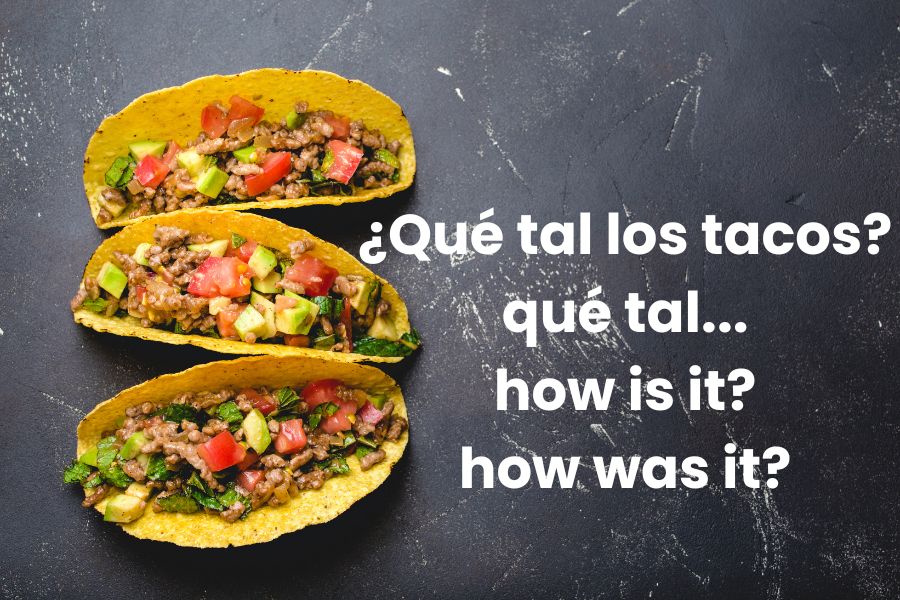
New sentence starters and phrase mining.
¿Qué tal…? – how is it? how was it?
¿Qué tal…? isn’t just polite small talk — it’s one of the most flexible, low-effort, and high-impact phrases you can have in your Spanish toolkit. It works like a ready-made template:
❓ ¿Qué tal + [noun]?
🟰 “How is…” or “How was…”
✅ No Verb Needed — No Conjugation or Tense Worries
You don’t need to worry about ser or estar, or whether the action happened in the past or is happening now.
Context does all the work, and Spanish speakers instantly understand what you mean.
Examples:
- If you’re still at the restaurant:
👉 ¿Qué tal los tacos? = “How are the tacos?” - After a concert:
👉 ¿Qué tal el concierto? = “How was the concert?” - Catching up in the evening:
👉 ¿Qué tal tu día? = “How was your day?”
🪄 Perfect for New Situations
When someone has just done something — taken a class, started a new job, watched a show — ¿Qué tal…? is a simple way to ask for their take:
- ¿Qué tal la clase de yoga? – How was the yoga class?
- ¿Qué tal el nuevo jefe? – What’s the new boss like?
- ¿Qué tal la serie? – How’s the show?
It’s a light check-in that invites personal reaction without demanding too much.
🎭 Tone Does the Talking
The meaning of ¿Qué tal…? shifts with your tone, facial expression, and context:
- Surprised or curious:
¿Qué tal ese tatuaje nuevo? – “Ooh, what’s the deal with that new tattoo?” - Teasing or skeptical:
¿Y qué tal tu dieta, eh? – “How’s that diet going, huh?” - Genuinely warm:
¿Qué tal tus papás? – “How are your parents doing?”
It’s not about the words — it’s about how you say them.
💬 Replies Are Often Short
Mexican Spanish leans casual in conversation. People often respond with just an adjective or short phrase:
- ¿Qué tal la película?
→ ¡Buenísima! / Un poco rara. / Larga pero buena.
You don’t need full sentences like Fue muy buena unless you want to add more. The vibe is relaxed.
🌎 Part of a “Right Now” Mindset
¿Qué tal…? reflects something central to Mexican culture:
A focus on the present moment and human connection, not labels or evaluations.
Instead of requesting a full review, you’re gently checking in:
¿Qué tal el centro hoy? = “What was the vibe like downtown today?”
It’s less about detail, more about shared feeling.
🔁 Used for Anything That Just Happened
It’s a go-to for everyday follow-ups:
- ¿Qué tal la peli?
- ¿Qué tal el cafecito?
- ¿Qué tal tu mamá?
Whether it’s someone’s meal, weekend, or family, ¿Qué tal…? works as a quick, human-level check-in.
🎙️ Doesn’t Always Expect a Real Answer
Sometimes it’s more rhetorical — a way to kick off a conversation or express shared experience:
- ¿Qué tal ese tráfico, eh? – “That traffic, huh?”
You’re not asking. You’re commiserating.
😄 It’s Emotionally Flexible
From gossip to genuine care, ¿Qué tal…? can do it all:
- ¿Qué tal la fiesta? ¿Mucho chisme? – Gossip at the party?
- ¿Qué tal tu ex? – How’s your ex?
- ¿Qué tal el calor? ¡Está cañón, no? – This heat is intense, huh?
This versatility makes it a natural part of daily Mexican speech.
🙋♀️ One Caveat: Use Discerningly with Acquaintances
While ¿Qué tal…? is common, visitors to Mexico should stay aware of tone and relationship.
If you’re speaking with someone older, in a formal setting, or if you’re using usted, you might want to soften or adjust:
- ¿Cómo le fue…? (More respectful)
- ¿Le gustó…? (Polite and neutral)
That said, in many relaxed settings — shared meals, casual events, everyday chats — ¿Qué tal…? feels totally appropriate, even with someone new.
🍽️ Example at Dinner with New Acquaintances:
You’re at a table and someone ordered fish. You might casually say:
– ¿Qué tal el pescado? Se ve bueno.
→ “How’s the fish? It looks good.”
That’s a perfect, non-invasive way to connect — relaxed, curious, friendly.
entonces = “then” (sequencing)
así que = “so” (cause-effect)
🧠 responder – to answer, to respond
| Spanish | English meaning | Usage |
|---|---|---|
| respondiste | you answered / didn’t answer (once) | preterite |
| respondías | you used to answer / were answering | imperfect |
| hayas respondido | you’ve answered (subjunctive) | dependent clause trigger |
| responderías | you would answer | conditional |
| responde | answer! (command) | informal tú |