
Por vs. Para #3: In Order To
Por v Para: #1 Reaction v Intention
Por vs. Para: #2 Duty vs. Support
Por vs. Para #3: In Order To
Por vs. Para #4: Direction and Movement
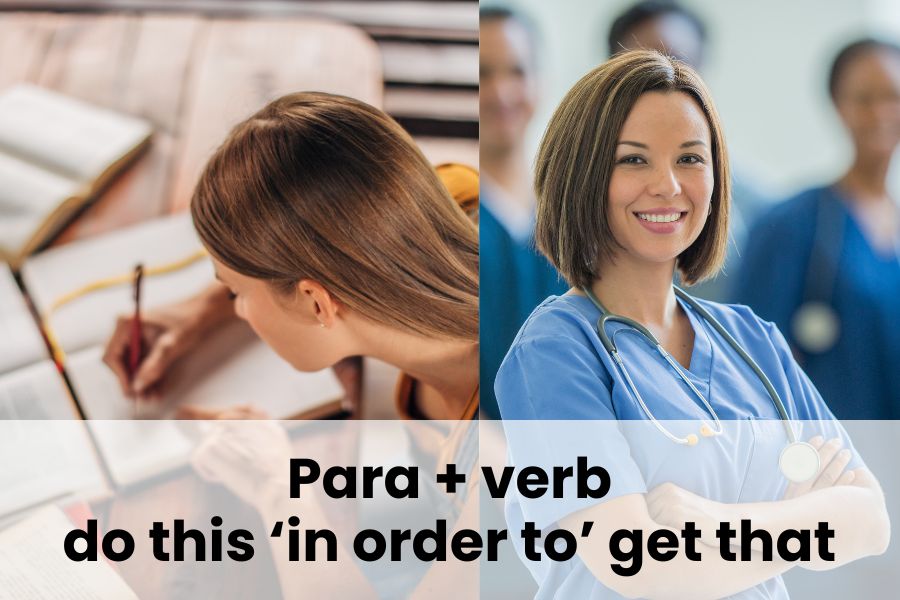
Use para + infinitive when expressing purpose. You can often mentally insert “in order to” in English.
[Action] para [goal/result verb] – ‘do this’ in order ‘to get that’
Para + Verb (Por doesn’t appear in this structure)
🧠 Key pattern:
If you can naturally insert “in order to…” before the verb in English, you’re in para territory.
🔧 Examples:
- Me levanto temprano para evitar el tráfico.
→ I wake up early in order to avoid traffic. - Juan me mandó un mensaje para decirme que llegaría tarde.
→ Juan sent me a message to tell me he’d be late. - Estudia mucho para pasar el examen.
→ He studies a lot in order to pass the exam. - Trabajo los fines de semana para ahorrar más dinero.
→ I work weekends to save more money.
💡 Tip:
This is one of the most stable, least ambiguous uses of para.
If you see para + verb, you’re not guessing anymore — it’s always “to / in order to.”
🧠 in English, we rarely say “in order to”
So here’s a set of 10 everyday English sentences that would need para + verb in Spanish — even if “in order to” isn’t said.
🔟 Real-life English sentences → (Would use para + infinitive in Spanish)
- I got up early to catch the bus.
- She called to ask a question.
- We’re going to the store to buy bread.
- He’s studying hard to pass the test.
- I’m saving money to travel next year.
- We left early to avoid traffic.
- They came here to talk to the manager.
- I opened the window to get some fresh air.
- He took the job to gain experience.
- I moved here to start over.