
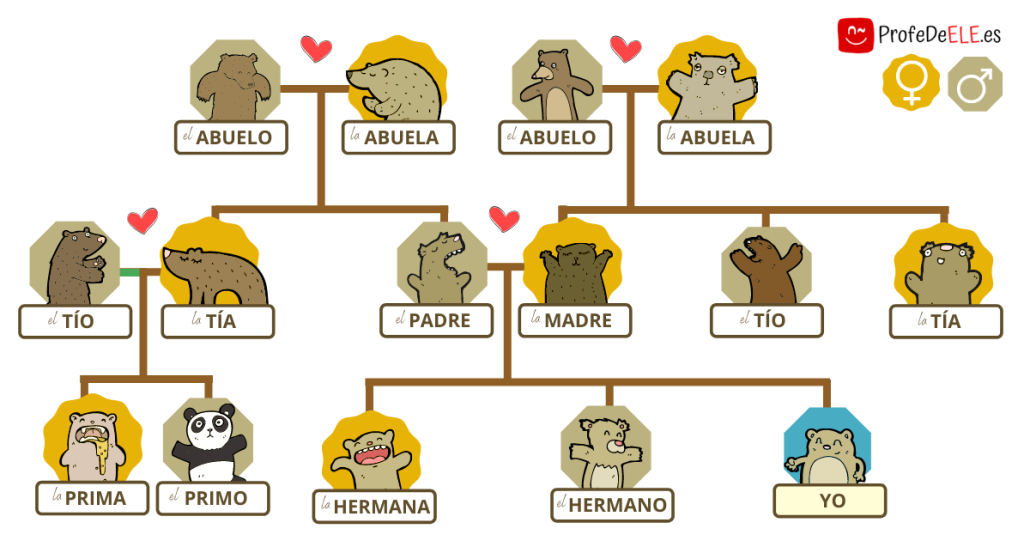
Familia Extensa
The Core Meaning of “Poner” → “To Place, Set, or Apply Something”
At its root, poner means to place, position, or apply something—physically, mentally, or emotionally. Over time, this base meaning expanded metaphorically into many different uses.
Familia de Sangre
“familia de sangre” literally means “blood family” or “blood-related family.” It emphasizes biological relationships, as opposed to family by marriage, like in-laws or “familia elegida” which is chosen family, like close friends who feel like family.
In everyday conversation, people often just say “familia” when referring to their blood relatives, unless they want to specifically distinguish between biological and non-biological family.
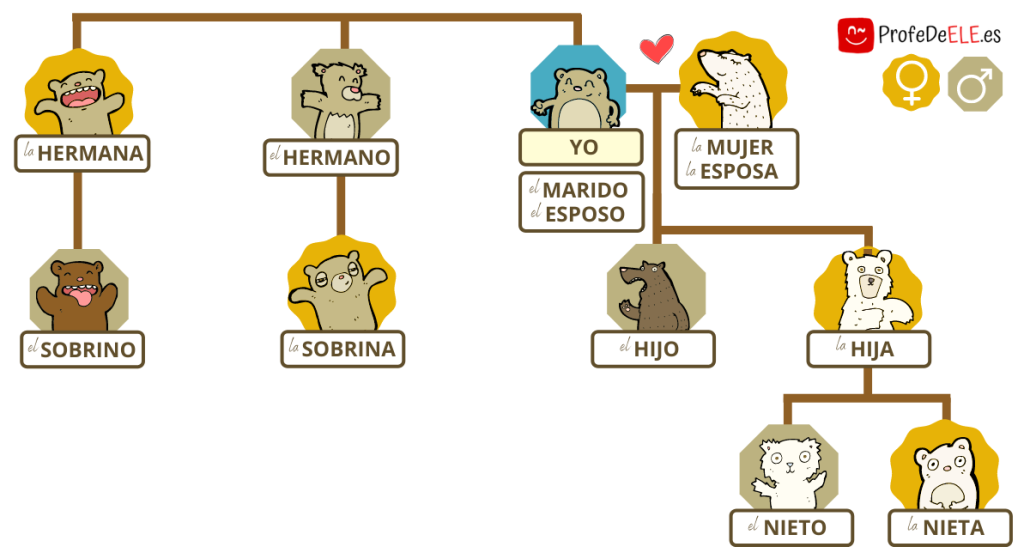
Familia Política
“Familia política” in Spanish refers to family by marriage or in-laws. It includes people like your suegros (parents-in-law), cuñados (siblings-in-law), and yernos/nueras (sons- and daughters-in-law).
This term comes from the idea that these family ties are not by blood (“de sangre”) but rather through legal or social bonds (hence, “política” in the sense of structured relationships, not government politics).
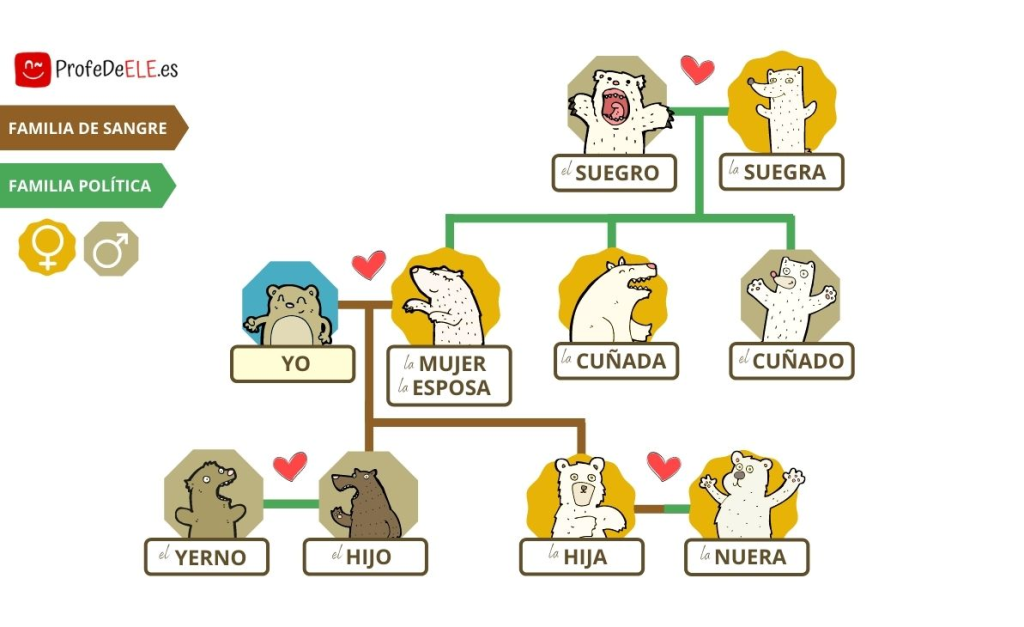
Direct In-Laws (Spouse’s Family)
- Suegro → Father-in-law
- Suegra → Mother-in-law
- Cuñado → Brother-in-law
- Cuñada → Sister-in-law
- Yerno → Son-in-law
- Nuera → Daughter-in-law
Extended In-Laws (Your Sibling’s Spouse’s Family)
- Consuegro → Your child’s father-in-law
- Consuegra → Your child’s mother-in-law
- (Used when two sets of parents-in-law refer to each other.)
- Concuñado / Concuñada → The spouse of your spouse’s sibling (basically, your brother-in-law’s or sister-in-law’s spouse)
- (Not super common in everyday speech, but it exists.)
Common Use in Sentences
- Mi suegra cocina muy bien. → My mother-in-law cooks very well.
- Mi cuñada y yo nos llevamos bien. → My sister-in-law and I get along well.
- Mi hija se casó y ahora tengo un yerno muy simpático. → My daughter got married, and now I have a very nice son-in-law.
Spanish has specific words for each in-law relationship, while in English, we sometimes have to add extra words (“my husband’s brother” instead of just “cuñado”).
Resource: Extended In-Laws (Your Sibling’s Spouse’s Family)
- Consuegro → Your child’s father-in-law
- Consuegra → Your child’s mother-in-law
- (Used when two sets of parents-in-law refer to each other.)
- Concuñado / Concuñada → The spouse of your spouse’s sibling (basically, your brother-in-law’s or sister-in-law’s spouse)
- (Not super common in everyday speech, but it exists.)
Common Use in Sentences
- Mi suegra cocina muy bien. → My mother-in-law cooks very well.
- Mi cuñada y yo nos llevamos bien. → My sister-in-law and I get along well.
- Mi hija se casó y ahora tengo un yerno muy simpático. → My daughter got married, and now I have a very nice son-in-law.
Resource: https://www.profedeele.es/actividad/la-familia/