
Animales del Bosque
Para mí, la naturaleza es muy importante. Es muy tranquila para mi alma …
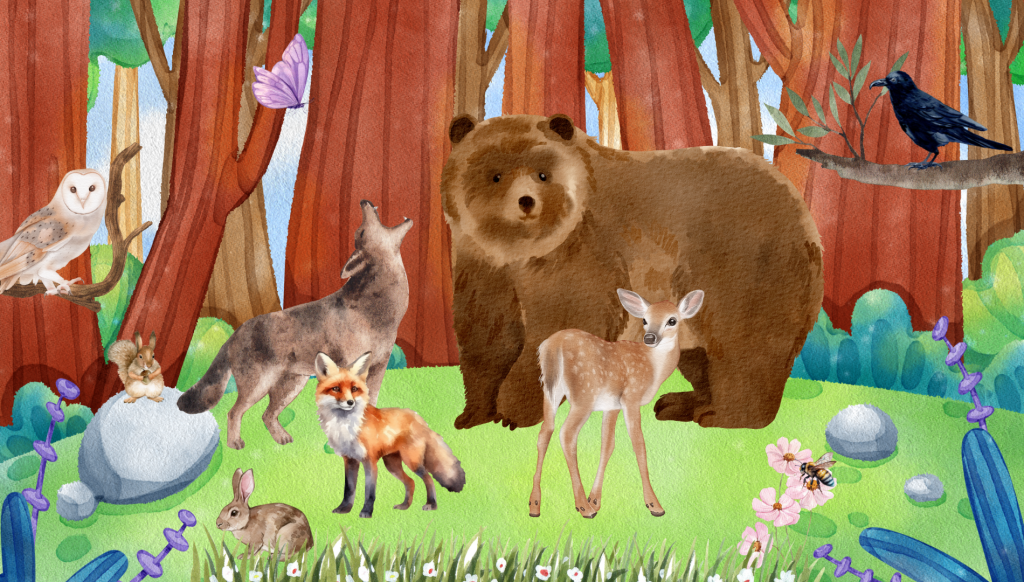
Un bosque es un lugar lleno de árboles y plantas, y es hogar de muchos animales.
Los animales, grandes y pequeños, viven en el suelo, bajo tierra, en las ramas de los árboles y en el cielo.
El Oso
Un oso es un mamífero grande y fuerte con pelaje grueso que puede ser marrón claro, marrón oscuro o negro. A bear is a large, strong mammal with thick fur that can be light brown, dark brown, or black.
Los osos tienen patas fuertes y grandes con garras afiladas, perfectas para cavar y trepar. Bears have strong, large paws with sharp claws, perfect for digging and climbing.
También tienen ojos pequeños y orejas redondas, por lo que parecen amables, pero las osas cuidando a sus crías pueden ser muy peligrosas. They also have small eyes and round ears, so they appear friendly, but mother bears caring for their cubs can be very dangerous.
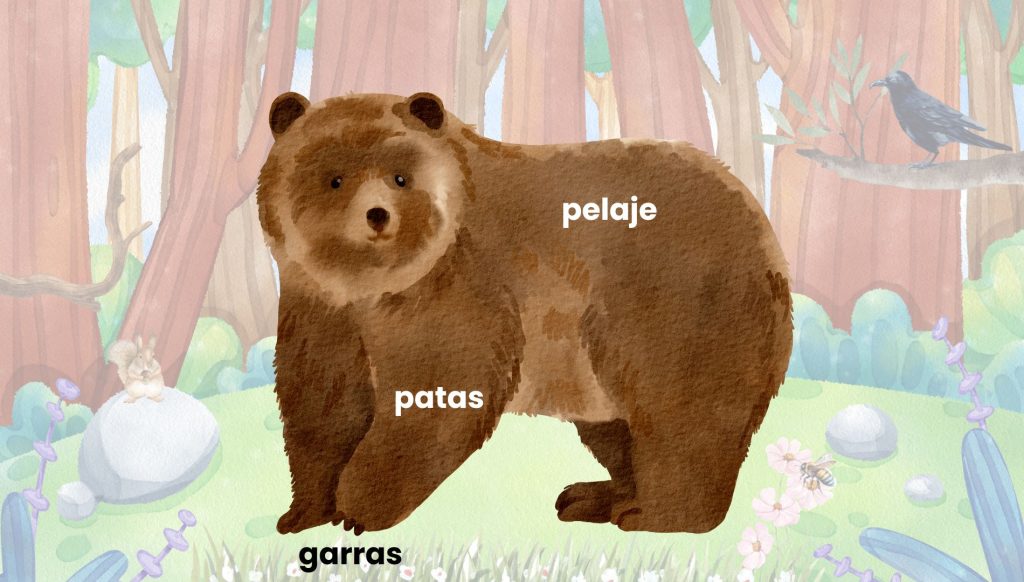
Los osos viven en los bosques y buscan alimento como bayas, nueces y raíces. Bears live in forests and forage for food such as berries, nuts, and roots.
Son omnívoros, por lo que también comen animales pequeños y carroña. They are omnivores, so they also eat small animals and carrion.
En el otoño, los osos se preparan para hibernar y comen mucho. Duermen en una cueva o bajo tierra hasta la primavera. In autumn, bears prepare for hibernation and eat a lot. They sleep in a cave or underground until spring.
pelaje – fur
patas – legs (animals)
garras afiladas – sharp claws
cavar – to dig
trepar – to climb
osezno – bear cub
Cría refers to offspring or young animals. It’s a general term used for the young of many animal species when discussed in everyday conversations.
bayas – berries
nuez/nueces – nut/s
raíz/raíces – root/s
carroña – carrion
cueva – cave
Animal legs
The term patas is generally used for the limbs of animals, especially when referring to their legs, regardless of whether they end in garras (claws), pezuñas (hooves), or almohadillas (pads on paws). For example:
For animals with human-like hands (e.g., monkeys), manos might be used, but their legs are still patas.
por lo que – so
To express cause and effect in Spanish, similar to “so” or “therefore” in English.
El Lobo
El lobo es un depredador fuerte y ágil. Los lobos tienen un pelaje grueso que les ayuda a mantenerse calientes en climas fríos. The wolf is a strong and agile predator. Wolves have thick fur that helps them stay warm in cold climates.
Sus colores varían desde gris y marrón hasta blanco o negro. Tienen dientes afilados y sentidos agudos, especialmente el sentido del olfato y el oído. Their colors vary from gray and brown to white or black. They have sharp teeth and keen senses, especially their sense of smell and hearing.
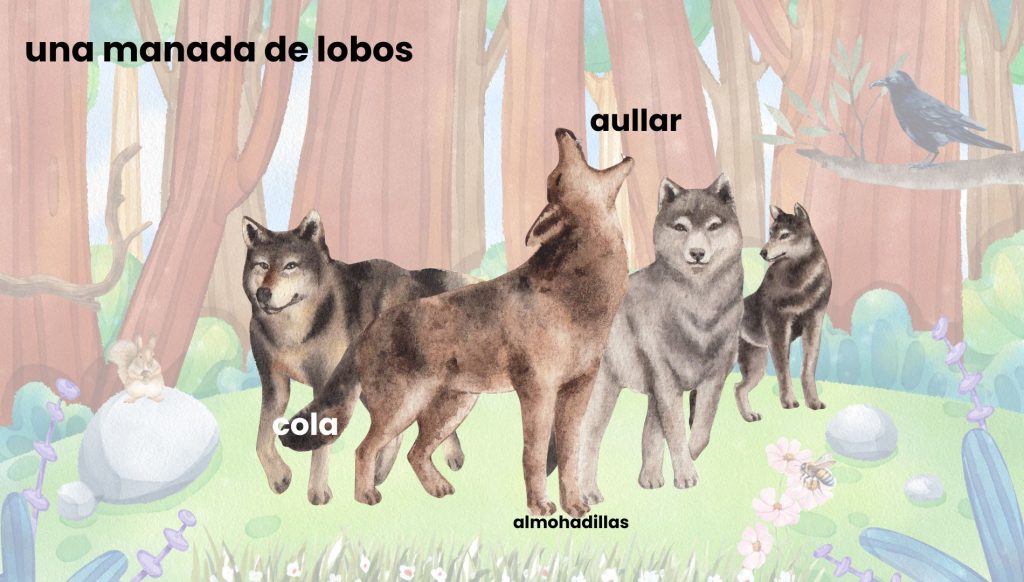
Los lobos viven y cazan en manadas, trabajando juntos. Aúllan para comunicarse con su manada a largas distancias. Wolves live and hunt in packs, working together. They howl to communicate with their pack over long distances.
A pesar de su fiero reputación, los lobos usualmente son tímidos cerca de los humanos y prefieren esconderse en el bosque. Despite their fearsome reputation, wolves are usually shy around humans and prefer to hide in the forest.
Mantenerse – is a reflexive verb that means “to stay” or “to keep oneself” in a certain state or condition. It’s commonly used when talking about staying in a particular physical, emotional, or mental state (warm, hydrated, calm, clean, in shape).
agudos – keen, acute
afilados – sharp
cazar – to hunt
manada – pack
Aullar – to howl
A pesar de – despite
fiero – fierce, ferocious
esconderse – to hide oneself