
La acompaño: I accompany you
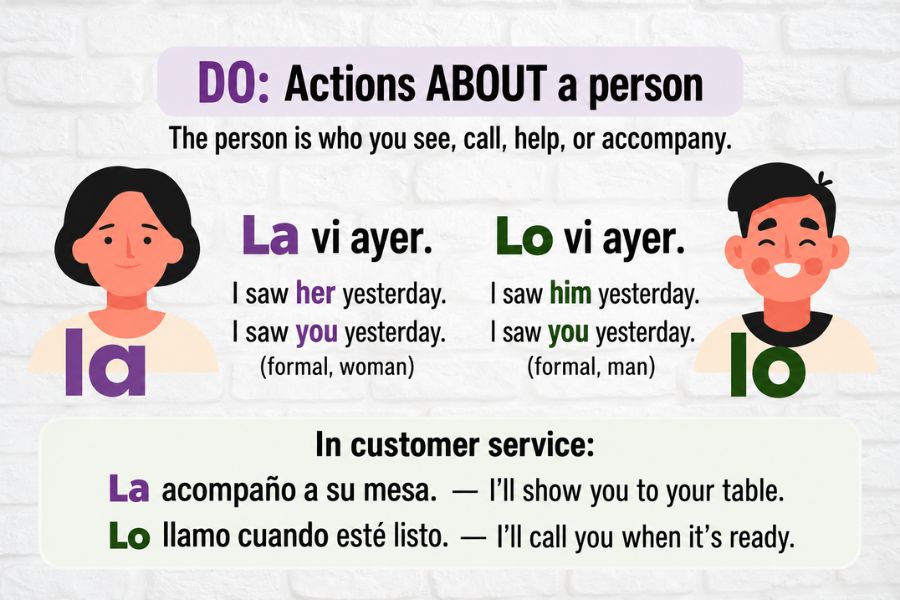
I don’t think I’ve ever seen ‘la’ used as ‘you’ when speaking to someone…
La acompaño — I accompany you (woman, formal)
“Si quiere, la acompaño hasta la esquina.”
In my theory of ‘little pronoun stories’ there is:
– who it lands on
– who or what is involved
– who did the action
More often than not, who or what is involved is a person or a thing that is masculine or feminine and can be referred to in shortcut by it’s pronoun of lo or la.
Vi el perro. Lo vi.
Vi la casa. La vi.
With ver, the person is who I see, not someone receiving something from me or benefiting from my action.
That person is my “who or what is involved.”
Te vi en la biblioteca ayer.
This is a direct object verb – who or what the action is about.
Direct Object Verbs
Some common verbs that are inherently direct actions. Direct Object – LO/LA
- Ver → to see
- Llamar → to call
- Buscar → to look for
- Encontrar → to find
- Ayudar → to help
- Acompañar → to accompany
When ‘la’ is you
“Si quiere, la acompaño hasta la esquina.”
A man offers a woman to accompany her to the corner, under his umbrella because it is raining, and she doesn’t have an umbrella of her own.
Te acompañé – I accompanied you (went with you) INFORMAL
La acompaño – I will accompany you FORMAL
Te vi – I saw you (informal)
La vi – I saw you (formal for female)
You’re likely to hear LA used as YOU in customer service, including hotels, tourism, shops and restaurants, when someone addresses a woman as usted. Or LO/YOU for a man.
- La acompaño a su mesa. — I’ll show you to your table (show a woman)
- Lo llamamos cuando esté listo. — We’ll call you when it’s ready. (call a man)
- ¿La puedo ayudar? — Can I help you?
In a restaurant, la acompaño a su mesa is an especially natural example.
lo/la identifies the person the verb is directly about—the person seen, called, accompanied or hugged. Le often identifies someone who receives something or for whom something is done.
Most common:
Ver, conocer, llamar, buscar, encontrar, esperar, invitar, acompañar, escuchar, seguir, saludar, recordar.