
As soon As
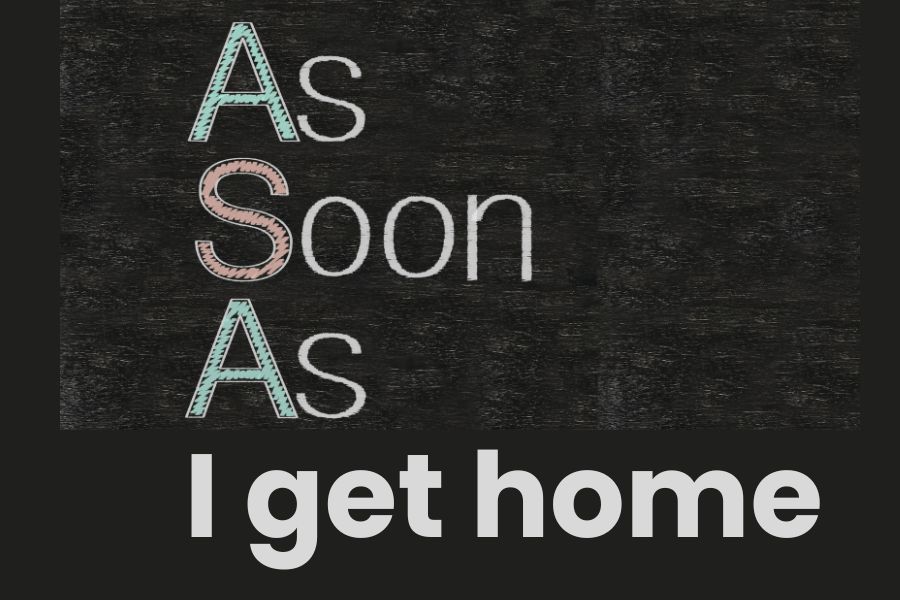
English says “as soon as” all the time.
Spanish does NOT have one single perfect equivalent — people use different options depending on vibe, flow, and region.
From the forum, here are the ones people use conversationally.
“As soon as” in Spanish
(Mexican-friendly, conversational, real usage)
En cuanto
Most common, most natural, short, easy.
Works basically like cuando but more immediate.
While en cuanto is not a subjunctive trigger it often triggers the subjunctive if you’re talking about something you’re going to do.
Future (not happened) → subjunctive
- En cuanto llegue, te mando mensaje. → As soon as I arrive, I’ll message you.
- En cuanto termine, salgo. → As soon as I finish, I’m leaving.
- En cuanto puedas, avísame. → As soon as you can, let me know.
Habitual / past → indicative
- En cuanto llego, pongo música. → Whenever I arrive, I put music on.
- En cuanto termina, siempre se duerme. → As soon as he/she finishes, he/she always falls asleep.
- En cuanto llegó, se acostó. → As soon as he/she arrived, he/she went to bed.
This is the one many natives default to without thinking.
👉 If you only want to learn one, learn this.
Apenas
Super common in Colombia, Mexico, and a lot of Latin America.
Meaning #1 (most relevant here): as soon as
- Apenas llegue, te aviso.
- Apenas termine, salgo.
BUT it also means “barely/hardly,” so context is everything.
Still, it fits naturally and feels casual, everyday.
Cuando (future → subjunctive)
Not literally “as soon as,” (more like when) but often used that way.
- Tenemos que lavarnos las manos cuando lleguemos a casa.
→ feels totally normal and natural
Everyday Spanish often prefers cuando + subjunctive over fancier connectors.
Al + infinitive
Super short and very common.
Feels like: “upon / when / as soon as”
- Al llegar a casa, me baño.
- Al terminar, hablamos.
This is basically the GOAT of short connectors.
Una vez que
A little more structured.
Meaning: “once…”
- Una vez que lleguemos, te llamo.
Good for storytelling or instructions.
Tan pronto como
Correct, but sounds formal / bookish for many speakers.
Not wrong — just not what most people say casually.
- Tan pronto como lleguemos… (valid)
…but your Colombian-American friend rolling his eyes = very common reaction 😂
Still useful to recognise.
Grammar Note
For en cuanto, apenas, cuando, tan pronto como, una vez que:
- habitual/present = indicative
- future/unknown = subjunctive
If it hasn’t happened yet → subjunctive.
If it happens regularly or happened already → indicative.
- En cuanto llegues, hablamos. (future)
- En cuanto llego, me cambio. (habitual)
Quick vibe guide
Which one feels like what?
| Spanish phrase | Vibe | Frequency |
| en cuanto | natural, neutral | ⭐⭐⭐⭐⭐ |
| apenas | casual, Latin American | ⭐⭐⭐⭐ |
| cuando | simplest, everyday | ⭐⭐⭐⭐⭐ |
| al + infinitive | super short, clean | ⭐⭐⭐⭐ |
| una vez que | “once…”, structured | ⭐⭐⭐ |
| tan pronto como | formal / textbook-y | ⭐⭐ |
En cuanto llegue a casa, como algo.
As soon as I get home, I eat something.
Apenas llegue, te mando mensaje.
As soon as I get there, I’ll message you.
Al llegar, me lavo las manos.
Upon/as soon as arriving, I wash my hands.
Cuando lleguemos, hablamos.
When/as soon as we get there, we’ll talk.
Bottom line for your brain:
- En cuanto
- apenas
- al + infinitive
cover 99% of real-life conversations.
Everything else is optional.