
Rápido o Rápidamente
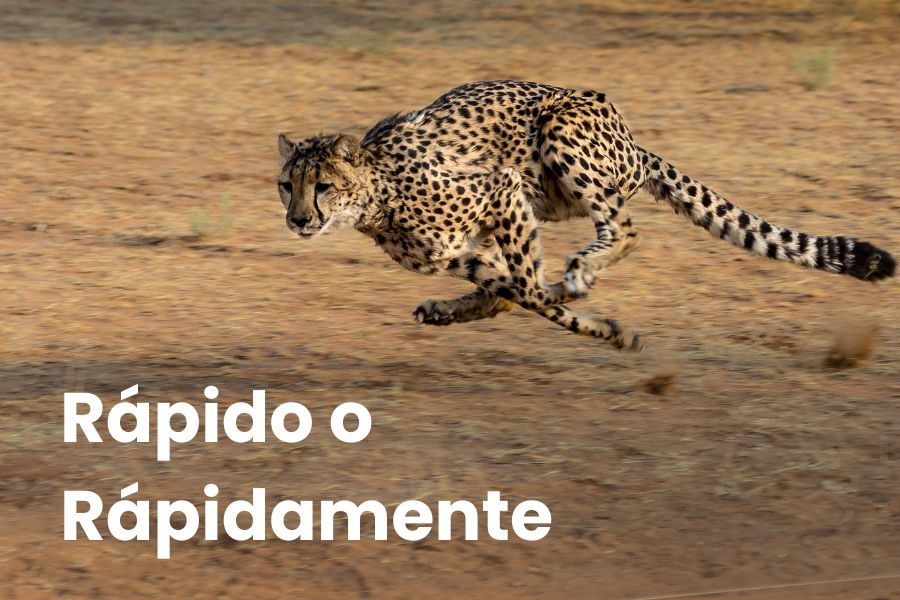
There are some ‘quickly/slowly’ words in Spanish that are always just ‘quick/slow’
— they never use the -ly form.
Quick or Quickly
English -ly adverbs = Spanish -mente adverbs
quickly → rápidamente
slowly → lentamente
politically → políticamente
basically → básicamente
Spanish makes adverbs by adding -mente to the feminine adjective form:
the masculine form is never used.
- clara → claramente
- rápida → rápidamente
- lenta → lentamente
But in everyday Spanish, “fast/slow” don’t use -mente
Instead of rápidamente / lentamente, people say:
- rápido (fast)
- lento (slow)
These are adjectives acting as adverbs, and it’s 100% normal.
Examples:
- Habla rápido.
- El día pasa lento.
- Come rápido.
Spanish only shortens -mente adverbs when the adjective is already widely used as an adverb in real speech — mostly speed and manner words.
Manner / tone
These also behave well as adverbs:
- fuerte (instead of fuertemente)
- suave (instead of suavemente)
Examples:
- habla fuerte
- habla suave
You can say “fuertemente/suavemente,” but they sound more stiff or dramatic.
Clear vs clearly
People often say claro as “clearly.”
Example:
- Habla claro. = Speak clearly.
But claramente exists and is used too.
Difference in tone:
- claro → shorter, more direct
- claramente → more formal or emphatic
Seguro / seguramente
Both exist:
- seguro (surely / for sure)
- seguramente (probably / most likely)
But they don’t mean the same thing, so this isn’t exactly a “shortcut” — just two different meanings.
Beyond these?
Not really.
Once you get outside this tiny group, the adjective-as-adverb trick stops being natural.
For most ideas you must use the -mente adverb.
Many -mente words are VERY common
Some ideas in Spanish have no natural adjective alternative, so the -mente form is standard:
- básicamente
- lógicamente
- prácticamente
- políticamente
- históricamente
- técnicamente
- sinceramente
- realmente
- totalmente
- obviamente
When you have a list, only the last one takes -mente
All earlier words switch to the feminine adjective:
- Habló clara, precisa y detalladamente. She spoke clearly, precisely, and in detail.
clara (f adj), precisa (f adj) and detalladamente (full adverb) - Respondió calma, segura y honestamente. She replied calmly, confidently, and honestly.
- Trabajaron rápida, organizada y eficientemente. They worked quickly, neatly, and efficiently.
Pattern:
adjective (fem.) + adjective (fem.) + adverb-mente