
Seated is an Adjective
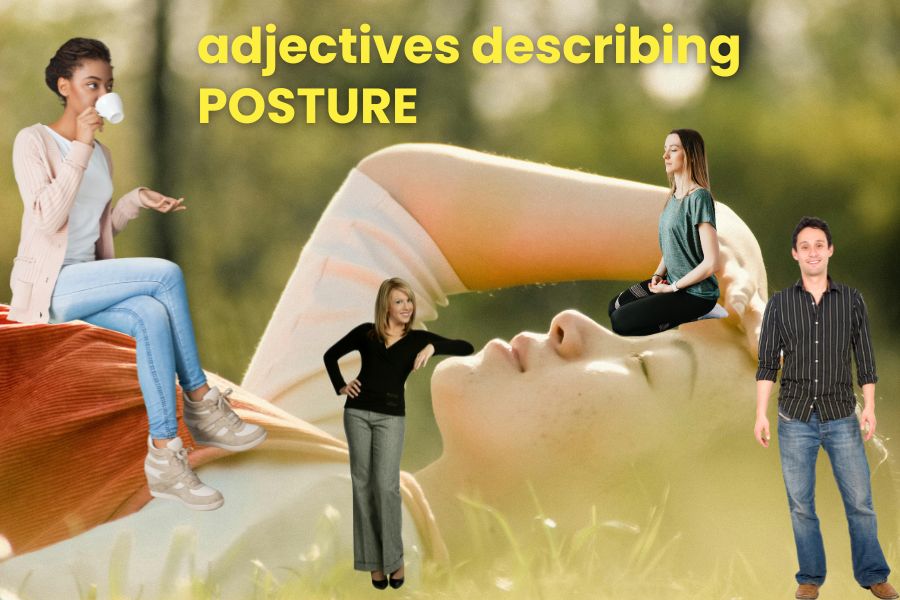
Spanish treats sentada as a description/adjective of position, not movement.
➡️ Note: The action of movement — going from standing to sitting — is expressed with the reflexive verb sentarse
(Ella se sentó en el banco para comer su taco. → “She sat down on the bench to eat her taco.”).
Solo lee historias cortas sentada en el sofá.
“She only reads short stories sitting on the couch.”
The difficulty lies in how Spanish and English map this specific set of verbs differently — in English they sound like -ing actions, while in Spanish they look like past tense.
Seated Is An Adjective
Spanish has a small set of “posture adjectives” that work exactly like sentado:
- sentado/a → seated
- parado/a → standing (very common in Latin America)
- acostado/a → lying down
- arrodillado/a → kneeling
- colgado/a → hanging
- recostado/a → reclining / leaning back
While they may look like gerunds in English, that’s only because English expresses some past actions with an irregular -ing form. Otherwise, we’d naturally say things like
I’ve been stood in line for ten minutes or
The cat is laid down on the sofa
The difficulty lies in how Spanish and English map this specific set of verbs differently —
in English they sound like -ing actions,
while in Spanish they look like past tense:
- Está sentado en el sofá. → He’s sitting on the couch.
sentado – past tense seated → sitting – verb in action - Está parado en la puerta. → He’s standing at the door.
parado – past tense stopped → standing – verb in action - Está acostado en la cama. → He’s lying on the bed.
acostado – past tense laid → lying – verb in action - Está arrodillado frente al altar. → He’s kneeling before the altar.
arrodillado – past tense knelt/kneeled → kneeling – verb in action
The Spanish sentences are using adjectives describing posture, formed from past participles.
They describe a state, not an act of movement, even if the English translation might make it sound like one.
Estaban sentadas junto a la ventana. → They were seated by the window.
Está parado en la puerta. → He’s standing at the door.
El gato estaba acostado en el sofá. → The cat was lying on the couch.
Están arrodillados frente al altar. → They’re kneeling in front of the altar.
Estaba recostado en el sofá mirando la tele. → He was reclining on the couch watching TV.
Los abrigos siguen colgados detrás de la puerta. → The coats are still hanging behind the door.
sentado/a — seated
Estoy sentado en el camión. → “I’m seated/sitting on the bus.”
Mi abuelo siempre come sentado en su silla favorita. → “My grandpa always eats seated/sitting in his favorite chair.”
🧠 Notes:
You have to say “seated” in English to keep the logic straight.
This is not “sitting” (the act), but the state of being in that position.
It feels stiff in English but it’s totally neutral in Spanish.
parado/a — standing (LatAm)
Llevo diez minutos parado en la fila. → “I’ve been stood/standing in line for ten minutes.”
Se quedó parado frente a la tienda esperando a su amigo. → “He stood in front of the shop waiting for his friend.”
🧠 Notes:
“Stood” in British English maps perfectly — it’s describing state, not movement.
Sounds wrong to some English ears, but grammatically it’s the same logic.
Neutral, everyday Spanish in Latin America.
acostado/a — lying down
El gato está acostado en el sofá. → “The cat is lying (seated/positioned) on the couch.”
Yo estaba acostada viendo una serie. → “I was lying down watching a show.”
🧠 Notes:
Awkward mapping in both languages.
English verbs “lie/lay/laid” are already confusing, so it helps to reframe this as a description:
“The cat is in a lying position.”
Acostado = state, not action.
arrodillado/a — kneeling
El niño está arrodillado buscando su juguete debajo de la cama. → “The boy kneeled, looking for his toy under the bed.”
Se quedó arrodillado un momento para rezar. → “He stayed kneeling for a moment to pray.”
🧠 Notes:
You’re not saying “he’s kneeling” (the act of going down on his knees), but rather “he is in the kneeled position.”
The literal meaning of arrodillado is “kneeled/knelt” describing the position after kneeling, not the act itself.
Like sentado or acostado, it shows state, not movement.
recostado/a — leaning back / reclining
Estaba recostado en la pared hablando por teléfono. → “He leaned against the wall talking on the phone.”
Se quedó recostada en el sofá después de comer. → “She stayed reclining (she reclined) on the couch after eating.”
🧠 Notes:
From sitting to leaning, these feel odd as descriptions in English.
We don’t often describe people this way, but Spanish does — easily and naturally.
So the trick is to think of the position as an adjective in your head.
colgado/a — hanging
Los abrigos están colgados detrás de la puerta. → “The coats are hanging/hung behind the door.”
El cuadro está mal colgado. → “The painting is badly hung.”
🧠 Notes:
Still the same structure — position/state adjectives.
These ones apply to objects rather than people but follow the same pattern.
Final Notes
Spanish uses past participles as adjectives to describe position or condition.
They don’t imply action, just how something or someone is at a given moment.
Estoy sentado. → I’m seated (state).
Él se sentó. → He sat down (movement).
That’s the key shift:
Stop seeing these as verbs — they’re position adjectives like “open,” “closed,” “broken,” “tired.”
Once you treat them that way, they make total sense:
- Está sentado → He’s seated / in a seated position.
- Está parado → He’s upright / on his feet.
- Está acostado → He’s lying down.
- Está arrodillado → He’s on his knees.
- Está recostado → He’s leaning back.
- Está colgado → It’s hanging.
They’re not poetic or formal — just everyday Spanish adjectives describing how something is in space.