
Amigos: Scene 1: Un Acogedor Café en Una Tarde de Domingo

Amigos: Un acogedor café en una tarde de domingo
This story is part one of six, a story within conversation.
- Scene 1 – Un Acogedor Café en Una Tarde de Domingo
- Scene 2 – Entradas para el Festival de Música
- Scene 3 – En el Festival de Música
- Scene 4 – Después del Festival
- Scene 5 – Juntarse de Javier
- Scene 6 – La Exhibición de Arte
Un acogedor café en una tarde de domingo
Alex: ¡Ey, Sofía! ¡Por aquí!
Sofía: Hola, Alex. Perdón por llegar tarde. El autobús tardó una eternidad.
Alex: Está bien. Solo estaba disfrutando la tranquilidad por un momento. ¿Cómo va tu fin de semana hasta ahora?
Sofía: Bastante bien. Fui al parque esta mañana. Estaban preparando para el festival de música del próximo fin de semana.
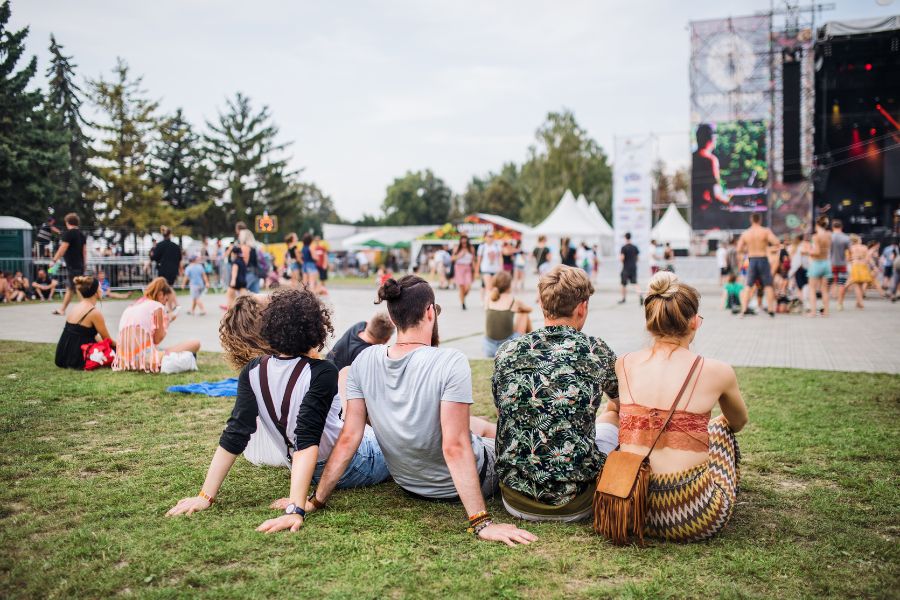
Alex: ¡Ah, cierto! Casi lo olvidé. ¿Vas a ir?
Sofía: Definitivamente. Ya tengo mi boleto. ¿Y tú?
Alex: Lo estaba pensando. ¿A qué hora empieza?
Sofía: Alrededor del mediodía, creo. Habrá camiones de comida y muchas bandas en vivo. ¡Deberías venir!
Alex: Suena divertido. Bien, voy a conseguir un boleto.
(Un mesero pasa cerca, y Alex le hace señas para llamar su atención.)
Alex: Voy a pedir un café. ¿Quieres algo?
Sofía: Un cappuccino, porfa. Ah, y a lo mejor un croissant. No he comido desde el desayuno.
Alex: Entendido. Vuelvo enseguida.
(Alex va al mostrador a pedir y regresa con las bebidas y la comida.)
Alex: Aquí tienes: un cappuccino y un croissant.
Sofía: Gracias. Entonces, ¿hay alguna noticia sobre tu proyecto de arte?
Alex: Sí, en realidad. Terminé una pintura nueva ayer. Estoy pensando en entrarla en la exposición local el próximo mes.
Sofía: ¡Qué genial! Me encantaría verla. ¿De qué se trata?
Alex: Es algo abstracta, pero está inspirada en la ciudad de noche. Muchos colores oscuros y luces.

Sofía: Suena increíble. Tienes que decirme si lo aceptan.
Alex: Claro. Por cierto, ¿escuchaste que Javier regresó al pueblo?
Sofía: ¿En serio? ¿Cuándo volvió?
Alex: Hace unos días. Ya está planeando una reunión para todos.
Sofía: Eso suena como él. ¿Cuándo es?
Alex: El próximo viernes. Creo que todavía está decidiendo el lugar.
Sofía: ¡Genial! Será bueno ponernos al día con él.
(Toman sus bebidas y platican mientras el café se llena con la multitud de la tarde.)
acogedor – cozy
tardó – comes from the verb tardar, which means “to take (time),” “to delay,” or “to be late.”
casi – almost
cierto – an adjective, it means “true” or “certain.” As an adverb, cierto can express agreement, similar to saying “of course” or “exactly”. It often shows up in situations involving remembering, forgetting, or realizing something, because it’s about acknowledging a truth or fact. For example:
- When remembering:
- “Ah, cierto, tenemos que salir temprano.” (Oh, right, we have to leave early.)
- When realizing:
- “¡Cierto! Eso pasó la semana pasada.” (Oh, right! That happened last week.)
- When acknowledging:
- “Cierto, tienes razón.” (Right, you’re correct.)
“cierto” can sometimes overlap with “claro” when expressing agreement, but they aren’t fully interchangeable because they carry slightly different nuances.
- Use “cierto” for affirming truth or correctness.
- Use “claro” for emphasizing clarity, certainty, or reassurance.
- In informal agreement, though, they can often be swapped without much difference.
camiones de comida – food trucks
conseguir – a very versatile verb in Spanish, often translated as “to get,” “to obtain,” or “to achieve.” It’s a common and practical word that is widely used in everyday Spanish.
pasa cerca – passes by, walks by
a lo mejor – maybe (more Mexican)
desde – since
enseguida – means “right away,” “immediately,” or “very soon.” It implies that something will happen or is happening without delay.
- Vuelvo enseguida (I’ll be right back)
- Lo hago enseguida. (I’ll do it right away.)
noticia – news, update
algo – means “something” in many contexts, but it also has the nuanced meaning of “kind of” or “somewhat” when used to modify adjectives or adverbs.
por cierto – by the way
todavía – still/yet
será – is the future tense form of the verb ser (to be)
ponernos al día – to catch up
platican – to chat (Mexican), instead of charlar
Conjugation of Haber for Existence
Present: Hay (There is/There are)
- Hay una silla aquí. (There is a chair here.)
- Hay muchas flores en el jardín. (There are many flowers in the garden.)
Future: Habrá (There will be)
- Habrá un espectáculo esta noche. (There will be a show tonight.)
- Habrá cambios en la reunión. (There will be changes in the meeting.)
Past: Hubo (There was/There were – completed action)
- Hubo un accidente ayer. (There was an accident yesterday.)
- Hubo muchas discusiones. (There were many discussions.)
Past Imperfect: Había (There was/There were – ongoing action)
- Había una casa grande aquí. (There used to be a big house here.)
- Había muchas personas en el parque. (There were many people in the park.)