
Turning Verbs Into Adjectives
There are past tense adjectives and present tense adjectives in Spanish.
Verbs can be turned into adjectives, such as pintar → pintado. These are past participles, which function as past tense adjectives. Hence the name PAST participle.
In contrast, an adjective like acogedor (cozy) comes from the verb acoger with the suffix -dor. This creates a descriptive adjective that reflects a quality or action in the present.
These two suffixes distinguish a verb-turned-adjective as past tense or present tense:
acoger → acogedor (welcoming/cozy): present tense suffix -dor/-dora.
pintar → pintado (painted): past tense suffix -ado/-ido.
Adjectives: Past and Present
1. Past Participles (-ado/-ido)
These adjectives are “past tense” in a sense because they describe a state resulting from an action. They are derived from the verb’s past participle form:
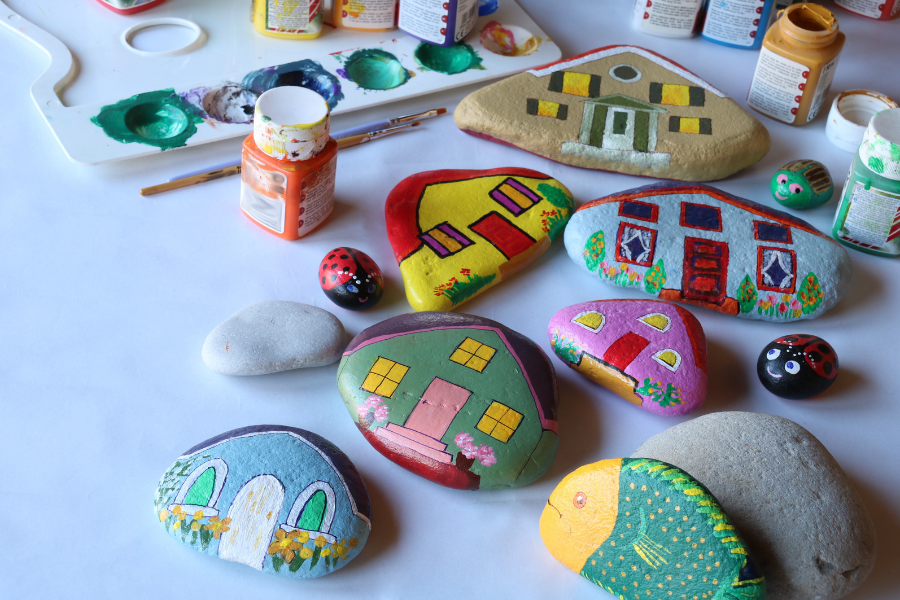
- Pintar → Pintado (painted): Describes something that has been painted.
- Example: Un cuadro pintado (A painted picture).
- Comer → Comido (eaten): Describes something that has been eaten.
- Example: Una manzana comida (An eaten apple).
These adjectives often convey completion or result.
2. Present Descriptive Adjectives (-dor/-dora)
Adding -dor/-dora to a verb stem creates an adjective that describes someone or something actively performing or having the quality of the verb. These adjectives are more dynamic and present in tone:
- Acoger → Acogedor (welcoming/cozy): Describes something or someone that welcomes or feels welcoming.
- Example: Un lugar acogedor (A welcoming place).
- Encantar → Encantador (charming/enchanting): Describes someone or something that charms.
- Example: Una historia encantadora (A charming story).
- Trabajar → Trabajador (hardworking): Describes someone who works hard.
- Example: Un estudiante trabajador (A hardworking student).
These adjectives focus on the action in progress or a habitual quality.

Key Difference: Time and Nature
- -ado/-ido (past participles): Describe the result of an action (past-oriented, completed).
- Cansar → Cansado: Tired (because energy has already been exerted).
- Romper → Roto: Broken (because it was broken in the past).
- -dor/-dora (dynamic adjectives): Describe a quality tied to an ongoing or habitual action (present-oriented, active).
- Cansar → Cansador: Tiring (describes something that causes exhaustion).
- Encantar → Encantador: Enchanting (describes something that actively charms).
In Summary
- -dor/-dora = Adjectives describing an active or habitual quality (like “welcoming” or “charming”).
- -ado/-ido = Adjectives describing a past or completed state (like “painted” or “tired”).
Can You Use Any Verb?
- Past participles (-ado/-ido): Yes, almost any verb can form a past participle because it’s about describing the result of an action.
- -dor/-dora adjectives: Not every verb will work because these describe actions or qualities tied to an ongoing or habitual nature. Some verbs simply don’t fit this framework.
Key Limitations
- Verb Semantics:
Not all verbs naturally lend themselves to forming -dor/-dora adjectives. For example:- Hablar → Hablador (talkative) works because it describes a habitual action.
- But Ver → Verdor doesn’t make sense because “seeing” isn’t a habitual or agent-like quality.
- Common Usage vs. Theoretical Possibility:
While it’s theoretically possible to apply these patterns, some forms may not exist in everyday usage or sound unnatural.
Adding -dor/-dora to a verb stem creates an adjective that describes someone or something actively performing or having the quality of the verb.
You pick -dor or -dora based on the gender of the person or thing you’re talking about.