
Un Viaje al Mercado
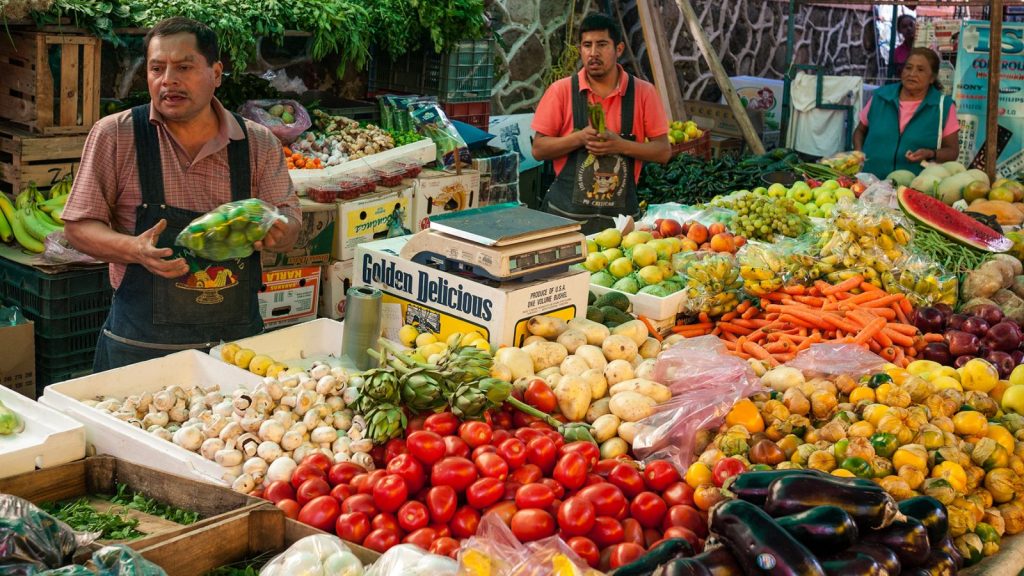
This fictitious story is to practice numbers as they appear naturally in descriptions, conversations, and interactions.
I have included pronouns to help me remember relevant conjugations (visually).
Un Viaje al Mercado
Sofía había leído a menudo sobre los mercados coloridos de México. Una semana después de llegar a Guadalajara, su nevera estaba vacía, así que decidió visitar el mercado local. Caminó por una calle ocupada y giró en la esquina. Allí estaba: un mercado grande lleno de vida. Sofia had often read about the colorful markets of Mexico. A week after arriving in Guadalajara, her fridge was empty, so she decided to visit the local market. She walked down a busy street and turned the corner. There it was: a large market full of life.
Se paró por un momento para asimilarlo todo. Había doce filas de puestos, cada una diferente. Algunos tenían frutas, otros tenían vegetales, y algunos vendían flores coloridas. Sofía miró a cientos de personas, todas hablando, riendo y regateando. She stopped for a moment to take it all in. There were twelve rows of stalls, each one different. Some had fruits, others had vegetables, and some sold colorful flowers. Sofía watched hundreds of people, all talking, laughing, and bargaining.
Ella caminó hacia la multitud y paró frente a un puesto de fruta. El proveedor, un hombre mayor con una sonrisa grande, él gritó, ‘Mangos! Tres por cincuenta pesos.’ Los mangos parecían frescos y dulces. Sofía le dio un billete de cincuenta pesos y eligió sus tres mangos. “Están bien dulces, señorita,” le dice el proveedor, agregando un mango extra a su bolsa. “Aquí tiene su pilón.” She stepped into the crowd and stopped at a fruit stall. The vendor, an older man with a big smile, called out, “Mangos! Three for 50 pesos!” The mangos looked fresh and sweet. Sofia handed him a 50-peso bill and picked her three mangos. “You won’t regret it,” the vendor said, adding an extra mango to her bag. “Here’s your pilón.”
Sofía se movió al puesto contiguo. Tenía cien naranjas apiladas en una ordenada pirámide. ‘¿Cuánto cuesta un kilo de naranjas?’ preguntó ella. ‘Veinte pesos,’ respondió el proveedor. Compró un kilo y miró mientras el proveedor pesaba la fruta. Sofia moved to the next stall. It had 100 oranges stacked in a neat pyramid. “How much for a kilo of oranges?” she asked. “20 pesos,” the vendor replied. She bought a kilo and watched as the vendor weighed the fruit.
Después, encontró un puesto que vendía vegetales. ‘¡Nopales! ¡Diez pesos cada uno!’ gritó un niño joven que ayudaba a su padre. Sofía pidió seis nopales. ‘Eso es sesenta pesos,’ dijo el niño. Ella sonrió y le dio el dinero. Next, she found a stall selling vegetables. ‘Cactus! 10 pesos each!’ shouted a young boy helping his father. Sofia asked for six cacti. ‘That is 60 pesos,’ the boy said. She smiled and gave him the money.
En otro puesto, una mujer vendía cilantro fresco. ‘¿Cuánto?’ preguntó Sofía. ‘Quince pesos por un manojo,’ respondió la mujer. Sofía tomó dos manojos y pagó treinta pesos. At another stall, a woman was selling fresh cilantro. ‘How much?’ Sofia asked. ’15 pesos per bunch,’ the woman replied. Sofia took two bunches and paid 30 pesos.
El mercado era emocionante. Los niños corrían entre los puestos mientras sus padres compraban. Sofía vio un puesto de jugo que ofrecía ocho tipos de aguas frescas. Eligió una con sabor a hibisco por veinticinco pesos. La bebida era fría y refrescante. The market was exciting. Children ran among the stalls while their parents shopped. Sofia spotted a juice stand that offered eight types of agua fresca. She chose one with hibiscus flavor for twenty-five pesos. The drink was cold and refreshing.
Cuando caminó más, conoció a una anciana que vendía limas. “Un kilo está a treinta y cinco pesos,” dijo la anciana. Sofia compró un kilo y lo puso en su bolsa. Ahora, su bolsa estaba llena. Contó sus elementos: diez en total, incluyendo mangos, naranjas, nopales, cilantro y limas. As she walked further, she met an old woman selling limes. “A kilo is 35 pesos,” the woman said. Sofia bought a kilo and put it in her bag. Now, her bag was full. She counted her items: 10 in total, including mangoes, oranges, nopales, cilantro, and limes.
Sofia se sentó en un banco cerca de la entrada del mercado. Abrió su cartera y contó su dinero. Había gastado trescientos pesos y le quedaban doscientos. Sofía disfrutó mucho de comprar en el mercado. Ahora quería decir a sus amigos sobre los muchos puestos, los cientos de personas y todo el alimento fresco que había encontrado. Sofia sat on a bench near the entrance to the market. She opened her wallet and counted her money. She had spent three hundred pesos and had two hundred left. Sofia had really enjoyed shopping at the market. Now she wanted to tell her friends about the many stalls, the hundreds of people, and all the fresh food she had found.
Cuando Sofía salía del mercado, el proveedor que le había vendido los mangos la saludó y gritó, “Vuelve pronto!” As Sofia was leaving the market, the vendor who had sold her the mangos waved and shouted, “Come back soon!”
11 – 20
- once
- doce
- trece
- catorce
- quince
- dieciséis
- diecisiete
- dieciocho
- diecinueve
- veinte
mercado – outdoor market; supermercado is an indoor market
vacía – empty
esquina – corner
asimilar – absorb, digest, assimilate
fila – row
puesto – stall
reír – to laugh
regatear – bargain, haggle
hacia – toward
proveedor – vendor
parecían
From parece is in the imperfect tense because it describes an ongoing or general impression in the past.
billete – bill, note
apilar – to stack or to pile. Apiladas has been used as an adjective. Apilado/a; apilados/as
pesar – to weigh
ordenar – to order, arrange, organise. Ordenada has been used as an adjective. Ordenado/a; ordenados/as
pedir – order, request, ask for
ofrecer – to offer
anciana – old woman
elemento – item
gastar – to spend, typically in relation to money, energy, or resources
quedar – to remain, to be left or to be located
banco – bench
contar – to count
21 – 30
- veintiuno
- veintidós
- veintitrés
- veinticuatro
- veinticinco
- veintiséis
- veintisiete
- veintiocho
- veintinueve
- treinta
up to 100
- 31 – treinta y uno
- 44 – cuarenta y cuatro
- 57 – cincuenta y siete
- 61 – sesenta y uno
- 79 – setenta y nueve
- 82 – ochenta y dos
- 95 – noventa y cinco
- 133- ciento treinta y tres
- 103 – trescientos uno