
What Happened To It: Passive Sentences
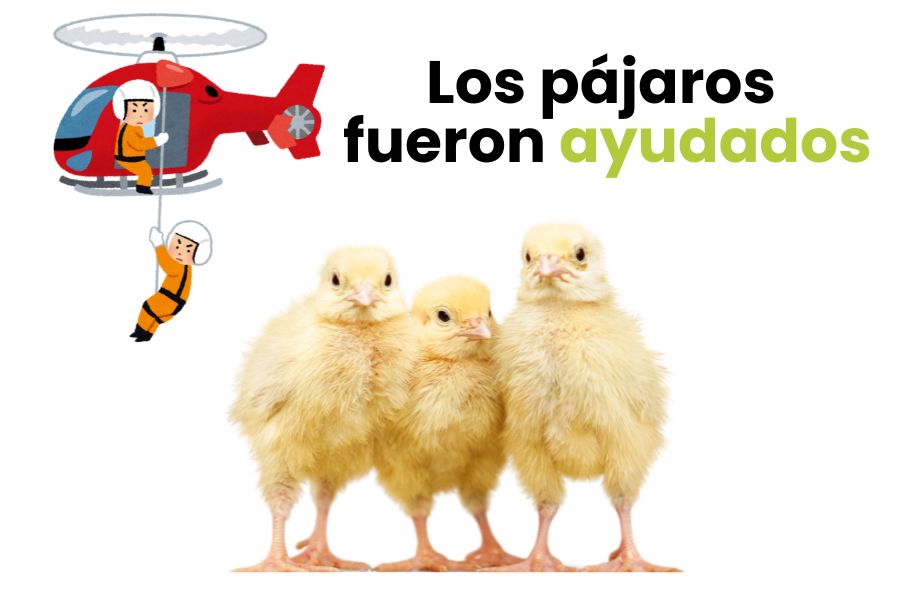
A sentence in this news article said: Los pájaros, casi todos pollitos pero también pavos y otras aves, fueron ayudados después de ser vistos en Delaware.
“Los pájaros fueron ayudados.”
I had never seen the verb ayudar expressed as “ayudados“
I found that:
- “Los pájaros fueron ayudados.” is a passive sentence
- When the subject (birds) has something done to it/them, the sentence becomes passive
- The verb (ayudados) sounds like it’s in the past tense when translated to english but:
- It’s actually a past participle
- ayudar ->ayudado (-ido/-ado)
- which is used like an adjective
- matches number and gender (ayudados)
- but it’s not called an adjective, just a past participle
- It’s actually a past participle
What Happened To It: Passive Sentences
✅ Passive Voice Rule: The subject receives the action, instead of doing it.
The door was left open.
Dinner was cooked an hour ago.
The car was stolen last night.
The package was delivered this morning.
That song was written in the 80s.
🟢 Singular:
- La carta fue escrita por mi hermana.
The letter was written by my sister. - El coche fue robado anoche.
The car was stolen last night. - El pastel fue comido por los niños.
The cake was eaten by the kids.
🔵 Plural:
- Los documentos fueron firmados esta mañana.
The documents were signed this morning. - Los libros fueron entregados a tiempo.
The books were delivered on time. - Las vacunas fueron distribuidas por el gobierno.
The vaccines were distributed by the government.
🟢 Comparisons:
✅ 1.
Active:
🔹 El jardinero cortó el césped.
🔸 The gardener cut the grass.
Passive:
🔹 El césped fue cortado por el jardinero.
🔸 The grass was cut by the gardener.
✅ 2.
Active:
🔹 Los niños rompieron la ventana.
🔸 The kids broke the window.
Passive:
🔹 La ventana fue rota por los niños.
🔸 The window was broken by the kids.
✅ 3.
Active:
🔹 El chef preparó la cena.
🔸 The chef prepared dinner.
Passive:
🔹 La cena fue preparada por el chef.
🔸 Dinner was prepared by the chef.
✅ 4.
Active:
🔹 La policía encontró al ladrón.
🔸 The police found the thief.
Passive:
🔹 El ladrón fue encontrado por la policía.
🔸 The thief was found by the police.
✅ 5.
Active:
🔹 Mis amigos organizaron la fiesta.
🔸 My friends organized the party.
Passive:
🔹 La fiesta fue organizada por mis amigos.
🔸 The party was organized by my friends.
✅ 6.
Active:
🔹 Una mujer rescató al gato.
🔸 A woman rescued the cat.
Passive:
🔹 El gato fue rescatado por una mujer.
🔸 The cat was rescued by a woman.
✅ 7.
Active:
🔹 Ellos construyeron un puente.
🔸 They built a bridge.
Passive:
🔹 Un puente fue construido por ellos.
🔸 A bridge was built by them.
✅ 8.
Active:
🔹 El maestro explicó la lección.
🔸 The teacher explained the lesson.
Passive:
🔹 La lección fue explicada por el maestro.
🔸 The lesson was explained by the teacher.
✅ 9.
Active:
🔹 Los mecánicos repararon el coche.
🔸 The mechanics repaired the car.
Passive:
🔹 El coche fue reparado por los mecánicos.
🔸 The car was repaired by the mechanics.
✅ 10.
Active:
🔹 El autor escribió el libro.
🔸 The author wrote the book.
Passive:
🔹 El libro fue escrito por el autor.
🔸 The book was written by the author.
Passive Voice Time Markers
These are the building blocks that tell you when the action happened — and in Spanish, they all use some form of “ser.”
was / were
is / are
will be
has / have been
had been
can / should / must be (with modals)
| Tense / Use | Ser Form | 🔹Example | 🔸Meaning |
| Simple past | fue / fueron | La carta fue escrita por Ana. | The letter was written by Ana. |
| Simple present | es / son | Las reglas son respetadas aquí. | The rules are respected here. |
| Future | será / serán | El paquete será enviado mañana. | The package will be sent tomorrow. |
| Present perfect | ha sido / han sido | Los datos han sido borrados. | The data has been erased. |
| Past perfect | había sido / habían sido | El coche había sido reparado. | The car had been repaired. |
| With modals | puede ser / debe ser | El problema puede ser resuelto fácil. | The problem can be solved easily. |
In Spanish, the past participle (in the passive voice)
isn’t technically an adjective, but it looks like one and acts like one
— it agrees in gender and number, follows the noun, and describes its state
— so I don’t care what it’s called, it behaves like an adjective, and that’s how I’m treating it.
✅ What does “with modals” mean?
It just means using words like “can, should, might, must, could” before the passive voice structure.
These words are called modals, but you don’t need to remember that. Just think of them as helpers that express:
- Possibility (can, might)
- Obligation (should, must)
- Permission (may)
- Ability (could)
🔹 English structure:
Modal + be + past participle
Examples:
- The cake can be eaten cold.
- The door should be locked at night.
- The rules must be followed.
- The dog might be adopted tomorrow.
🔸 Spanish structure:
[Modal] + ser + participio pasado
Spanish uses verbs like:
- poder → can / might
- deber → should / must
- tener que → have to
- haber que → (it has to be done — general)
Examples:
- El pastel puede ser comido frío.
- La puerta debe ser cerrada por la noche.
- Los errores tienen que ser corregidos.
- Este formulario debe ser firmado antes del viernes.
🧠 Just think:
If you’re saying “should be done” or “can be fixed” — you’re in modal + passive land.