
Verbal Nouns with -ante
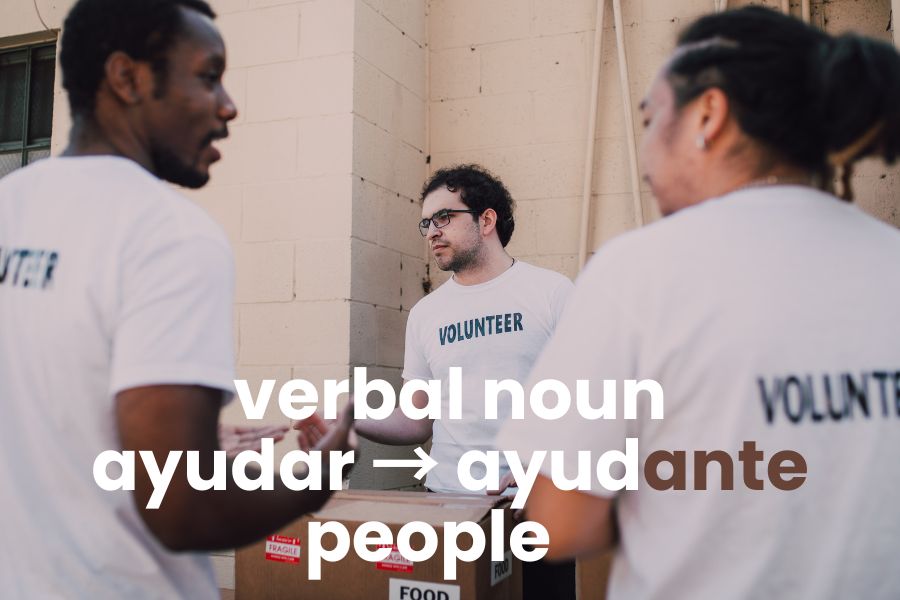
Comparing words with the suffix -ante.
The difference between words like importante and caminante.
There are basically two “-ante” worlds” in Spanish
-ante words almost always describe a role
They’re gender-neutral by default
1) The real “agent / doer / thing that does X” nouns + adjectives
These come straight from the verb stem and mean “the person or thing that performs the action.”
This is where amante, calmante, hablante live.
- amante → someone who loves
- calmante → something that calms
- hablante → someone who speaks
They are verbal nouns.
Turn verbs into nouns.
You can reverse them back to a verb they came from. Amante → amor
These feel alive in the language — you can often coin new ones and people get it.
2) The “Latinate adjectives” that just happen to end in -ante
These ones aren’t directly derived from turning verbs into nouns.
They come from older Latin participles, not the modern verb stems.
- interesante
- importante
- impresionante
- elegante
- brillante
- constante
They’re basically just adjectives.
These don’t behave like verbal nouns.
You can intuit the meaning because of English, but you can’t reverse them back to a verb the way you can with hablante / amante.
Creative and personalised Spanish
The first group behaves like something you could invent on the fly and Spanish listeners would accept:
- escuchante (someone who listens) — not common, but understandable
- curante (soothing, healing) — rare, but makes sense
- caminante (walker) — very real
Top 10 Verbal Nouns You’ll Hear Constantly in Mexico
1) El estudiante
→ estudiar
The most common -ante/ente “doer” noun in the country. Every school, uni, training program, job form uses it.
2) El comerciante
→ comerciar
Super common in markets, tianguis, small-business talk. Means a seller/merchant.
3) El cantante
→ cantar
Used broadly — not just pros. If someone sings well, even casually, people will joke “¡Eres cantante, ¿eh?”
4) El ayudante
→ ayudar
Very common in workplaces — kitchens, talleres, construction, tiendas. Means “assistant/helper.”
5) El vigilante
→ vigilar
Used for security guards/doormen. You see and hear it everywhere.
6) El caminante
→ caminar
Common in phrases like “cuidado con los caminantes” near roads, or for hikers/pilgrims.
7) El amante
→ amar
Very common in both literal (lover) and joking/figurative ways.
8) El hablante
→ hablar
Used in language-learning contexts or when referring to native speakers.
“los hablantes nativos” is super normal.
9) El visitante
→ visitar
Used constantly in tourism, museums, government buildings, community events.
10) El viajante
→ viajar
In Mexico this often means a travelling salesperson, not just “someone who travels.”
Many travel-relevant ones are low-key temporary identities
People use them to describe what you are right now, not forever.
- You help today → eres ayudante.
- You join a workshop → eres participante.
- You walk everywhere → eres caminante.
- You study Spanish this year → eres estudiante.
It fits the flexibility of the roles you take on while traveling.
Estar v Ser
The role feels temporary…
…but the grammar classifies it as an identity, not a passing state.
Spanish doesn’t ask:
“Is this temporary or permanent?”
Spanish asks:
“Is this describing what you are (identity/role) or how you are (state/condition)?”
And these -ante nouns?
They are roles, even if the role only lasts an hour.