
Used To: There’s ONE Verb for That
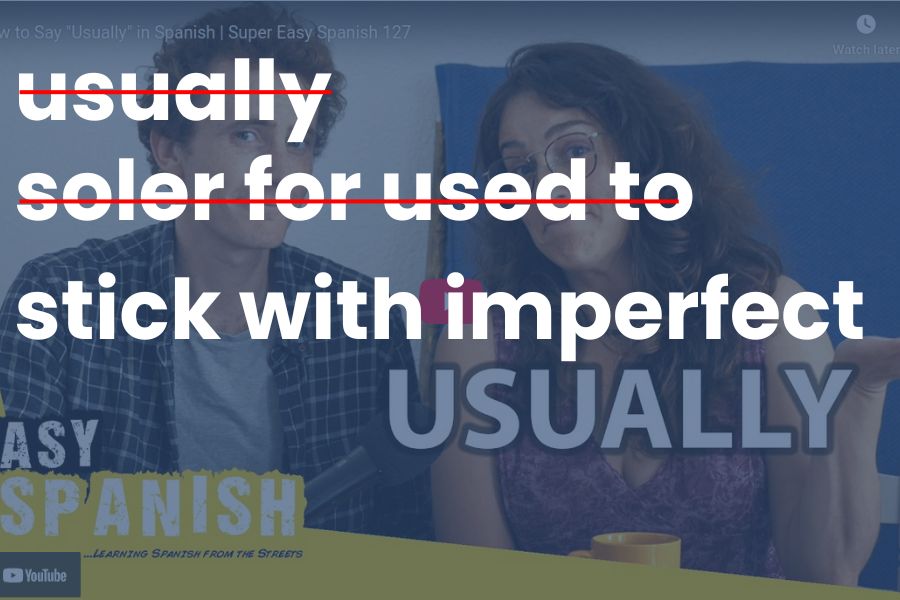
The imperfect tense is used for:
– background storytelling
– and “used to”
The verb soler (to usually do something):
✅ In the imperfect tense (ironically), it becomes one clear verb for “used to”
[soler in imperfect] + [infinitive verb]
→ expresses “used to [do something]”
Letting the imperfect stick to storytelling.
Soler = “To Usually Do Something”
✅ Only conjugate soler — the main verb stays in the infinitive.
Formula (Present):
[soler in present] + [infinitive] → “usually (do something)”
Example: Suelo leer antes de dormir → I usually read before bed
See Youtube: https://www.youtube.com/watch?v=LNv1Bhcg0jU
But Here’s the Real Gold → Soler = “Used To”
Use soler in the imperfect for a clean, no-fuss “used to”
→ No need to conjugate the main verb in the imperfect
Formula (Imperfect):
[soler in imperfect] + [infinitive] → “used to (do something)”
Example: Solía leer antes de dormir → I used to read before bed
Why It Matters (My Aha Moment)
- The imperfect tense does two things:
— storytelling
— “used to” actions - Using soler gives you a clean way to remove “used to” from that mess
- Now you can:
✔ Use soler for “used to”
✔ Use imperfect just for storytelling and background
Example of Imperfect as Storytelling (not ‘used to’):
Yo escuchaba la radio cuando me sonó el teléfono.
→ I was listening to the radio when the phone rang
✅ This is a scene in progress, not a past habit
✅ Let the imperfect handle that
How to Say “Used To” with Soler
Formula:
[soler in imperfect] + [infinitive verb]
This means “used to (do something)” — with no need to conjugate the main verb.
Imperfect Conjugations of Soler
- yo solía → I used to
- tú solías → you used to
- él / ella / usted solía → he/she/you used to
- nosotros/as solíamos → we used to
- ellos / ellas / ustedes solían → they/you all used to
Examples of Soler for “Used To”
| Soler + Infinitive | Regular Imperfect Verb | English Meaning |
|---|---|---|
| Yo solía correr en las mañanas. | Yo corría en las mañanas. | I used to run in the mornings. |
| ¿Tú solías venir aquí? | ¿Tú venías aquí? | Did you use to come here? |
| Mi abuela solía cocinar todos los domingos. | Mi abuela cocinaba todos los domingos. | My grandma used to cook every Sunday. |
| Nosotros solíamos jugar en el parque. | Nosotros jugábamos en el parque. | We used to play in the park after school. |
| Ellos solían viajar mucho antes. | Ellos viajaban mucho antes. | They used to travel a lot back then. |
🇲🇽 In Mexican Spanish:
- The imperfect tense (e.g. iba, comía, jugaba) is by far the most common and natural way to say “used to.”
- Soler is understood and correct, but it’s used less frequently, and with a more reflective, thoughtful, or literary tone.
🧠 Why?
Because in real-life conversation:
- Mexicans favor direct, simple phrasing
- Saying “jugábamos” is quicker and more familiar than “solíamos jugar”
So while soler is a great tool for your English brain to organize ideas and simplify verb load (like you said), most Mexicans will just go with:
De niño jugaba mucho afuera.
→ As a kid, I used to play outside.
Over:
De niño solía jugar afuera.
🔁 When soler does show up:
- In storytelling with a slightly reflective tone
- In writing or thoughtful conversation
- When you want to highlight a past routine, habit, or contrast
(“Solía levantarme temprano, pero ahora duermo más.”)
✅ So what should you do?
Use soler when:
- You want to express “used to” clearly and cleanly in your own speech
- You’re structuring ideas in your head or explaining yourself
- You’re practicing and reinforcing the concept
But also keep practicing the imperfect forms (like jugaba, comía, iba) because:
- They’re what you’ll hear the most
- They’re what people will expect to hear from you
✅ Think of it like this:
“I may not remember the imperfect conjugation for this verb right now… but I do remember ‘solía + [infinitive].’ Boom — message delivered.”
💡 Use soler when:
- You’re mid-sentence and blank on a verb form
- You’re practicing fluidity and don’t want to stall
- You want to focus on meaning over perfection
Spain Spanish speakers do use soler more often and more naturally than Mexican speakers, especially in formal speech, interviews, or descriptive narration. What you saw in the video — people using soler in street interviews — is very representative of Peninsular Spanish usage.
🇪🇸 Spain:
✅ Soler is much more common
- Used in everyday speech to talk about routines
- Shows up naturally in explanations, interviews, and storytelling
- Feels smooth and educated, not stiff or reflective
Example from Spain:
¿Sueles cocinar en casa o comer fuera?
→ Do you usually cook at home or eat out?
Solía correr por las mañanas antes de lesionarme.
→ I used to run in the mornings before I got injured.
🇲🇽 Mexico (and much of Latin America):
🟡 Soler is understood and correct, but:
- Used less often in daily speech
- Feels a bit more bookish or formal
- Mexicans tend to default to imperfect tense for both routines and “used to”
So instead of:
Solía correr por las mañanas.
You’re more likely to hear:
Corría por las mañanas.
🧠 Bottom line:
You’re not imagining the difference — soler is more visible in Spain Spanish and fits naturally into their rhythm. That doesn’t mean it’s wrong in Mexican Spanish — just that it’s used more sparingly and with intention.
If you’re training your ear and tone for Mexican Spanish, it’s totally fine to use soler as a tool for clarity while you build fluency, then shift toward imperfect verbs as your default once you’re confident.