
That Works For Me
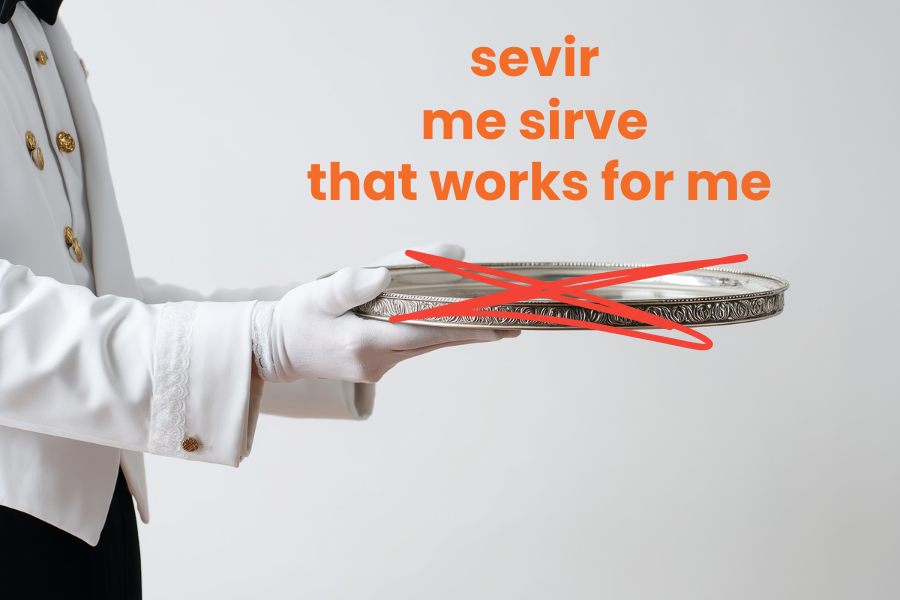
That works for me
The definition of servir is to serve.
It is used colloquially in Spanish the way we use these in English:
“Works for me
“Is useful to me”
“Fits my schedule”
“Is good for me” / “works fine for me”
“Does the job” / “gets the job done”
“Is OK / suits me fine”
“Useful” / “usable”
“Serve” in English carries a weird social weight that servir in Spanish absolutely does not have.
In casual speech, people sometimes sound like they’re using servir to mean “broken”, but that’s not actually what’s happening.
It sounds like:
- Este maldito iPhone no sirve.
→ “This damn iPhone doesn’t work.”
But the real meaning is:
“It’s not useful to me / it doesn’t do what I need / it’s not serving its purpose.”
NOT
“It’s mechanically broken.”
servir = works for me
funcionar = works mechanically
But “works” covers both in English
Servir is NOT reflexive by nature.
But in the “works for me / suits me” meaning, it often picks up a pronoun, which makes it look reflexive when it’s actually indirect-object, not reflexive.
It uses me / te / le / nos / les, but these are indirect objects, not reflexive.
- me sirve → it works for me
- te sirve → it works for you
- no me sirve → it doesn’t work for me
This is why it gets confusing:
It looks reflexive but isn’t.
Super useful
More useful than people realise.
Using servir to mean “to work for / to be convenient / to suit someone” shows up in everyday Mexican Spanish all the time — way more than “funcionar” in many contexts.
ways you will actually hear servir in everyday Mexican Spanish.
These cover like 95% of real-life usage.
⭐ 1) “¿Qué hora te sirve?”
Most common of all.
Used CONSTANTLY when making plans.
- ¿Qué día te sirve?
- ¿Te sirve mañana?
- A las siete no me sirve.
- ¿Esa hora te sirve o no?
Think: “Does that work for you?”
⭐ 2) “¿Te sirve?” / “Me sirve.”
The “is this useful for you / does this help you?” meaning.
- ¿Te sirve esto?
- ¿Te sirve la info?
- Sí, me sirve un buen.
- No me sirve, gracias.
Think: “Does this work for what you need?”
⭐ 3) “No me sirve.”
When something isn’t useful for your purpose.
Not broken — just not helpful to you.
- Este horario no me sirve.
- Esa solución no me sirve.
- Este plan no me sirve.
- Ese teléfono no me sirve. (not useful for what I need)
Mexicans use this constantly.
⭐ 4) “¿En qué te puedo servir?”
Classic service phrase — shops, counters, offices, phone calls.
- ¿En qué le puedo servir? (usted)
- ¿Te puedo servir en algo?
Think: “How can I help you?”
You’ll hear it every time you walk into a business.
Servir does not mean broken
In casual speech, people sometimes sound like they’re using servir to mean “broken”, but that’s not actually what’s happening.
It sounds like:
- Este maldito iPhone no sirve.
→ “This damn iPhone doesn’t work.”
But the real meaning is:
“It’s not useful to me / it doesn’t do what I need / it’s not serving its purpose.”
NOT
“it’s mechanically broken.”
no funciona = not functioning (objective)
Vibe:
No drama, no emotion.
Just stating a technical problem.
está descompuesto = broken (physical)
Vibe:
This is the strongest in terms of finality.
It implies physical or internal damage — it won’t work until repaired.
no sirve
Vibe:
It might be broken, or it might just not be doing what you need.
Blunt, everyday, emotional.
Real-life overlap:
If your phone is glitching, you might say “no sirve,”
even if the correct word is “no funciona.”
That’s how everyday speech works.