Temperatura
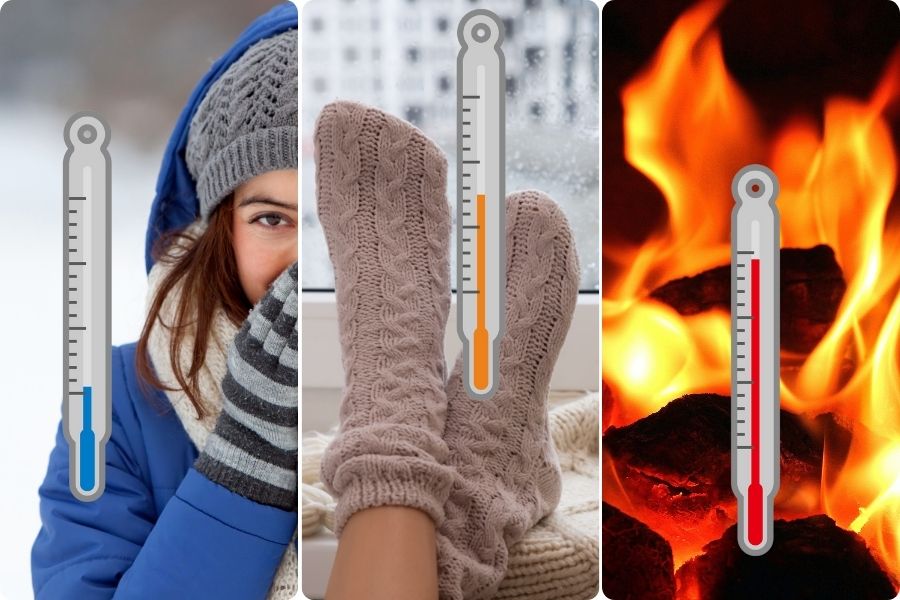
For weather, comfort, reactions, and everyday situations.
Weather & Physical Sensations
These are essential for talking about how hot or cold it feels around you.
| English | Spanish | Example |
|---|---|---|
| It’s hot. | Hace calor. | Hace mucho calor hoy. (It’s really hot today.) |
| It’s cold. | Hace frío. | Hace un poco de frío esta mañana. (It’s a bit cold this morning.) |
| It’s warm. | Está templado. | El clima está templado hoy. (The weather is mild today.) |
| I feel hot. | Tengo calor. | Voy a abrir la ventana, tengo calor. (I’m going to open the window, I’m hot.) |
| I feel cold. | Tengo frío. | Tengo frío, voy a ponerme un suéter. (I’m cold, I’m going to put on a sweater.) |
💡 Key rule:
- Use “hace” for weather (Hace calor/frío).
- Use “tengo” for how you feel (Tengo calor/frío).
More Weather Descriptions, Seasons, Etc
Drinks, Food, and Surfaces
Useful for ordering food, talking about drinks, or touching objects.
| English | Spanish | Example |
|---|---|---|
| It’s hot. (for drinks, food, objects) | Está caliente. | Cuidado, el café está caliente. (Careful, the coffee is hot.) |
| It’s warm. (pleasantly warm) | Está tibio/a. | Me gusta el agua tibia para lavarme la cara. (I like warm water to wash my face.) |
| It’s lukewarm. (kind of warm, but not enough) | Está templado/a. | El té está templado, ya no está caliente. (The tea is lukewarm, it’s not hot anymore.) |
| It’s cold. | Está frío/a. | Mi sopa está fría, la voy a calentar. (My soup is cold, I’m going to heat it up.) |
💡 When to use what?
- Caliente = hot (like coffee, tea, or soup).
- Tibio = comfortably warm (like a warm bath).
- Templado = lukewarm (water that’s not quite hot or cold).
People’s Personality & Reactions
Spanish often describes emotions using temperature words. These are the ones worth knowing.
| English | Spanish | Example |
|---|---|---|
| He/she is warm/kind. | Es una persona cálida. | Me cayó bien, es muy cálida. (I liked her, she’s very warm.) |
| He/she is cold/distant. | Es una persona fría. | No habla mucho, es un poco fría. (She doesn’t talk much, she’s a bit cold.) |
| His/her reaction was lukewarm. | Su reacción fue tibia. | Le dije la noticia y su reacción fue tibia. (I told him the news, and his reaction was lukewarm.) |
💡 These will come up in conversations when describing someone’s personality or reaction.
Situations, Conversations & Politics
Sometimes, temperature words describe tension, excitement, or controversy.
| English | Spanish | Example |
|---|---|---|
| It’s a heated discussion. | Es una discusión caldeada. | Se metieron en una discusión caldeada sobre política. (They got into a heated discussion about politics.) |
| It’s a hot topic. | Es un tema candente. | La inmigración es un tema candente en México. (Immigration is a hot topic in Mexico.) |
| The atmosphere is tense. | El ambiente está caldeado. | En la oficina, el ambiente está caldeado hoy. (At the office, the atmosphere is tense today.) |
💡 These are good for understanding conversations, even if you don’t use them often yourself.