
Pronouncing D
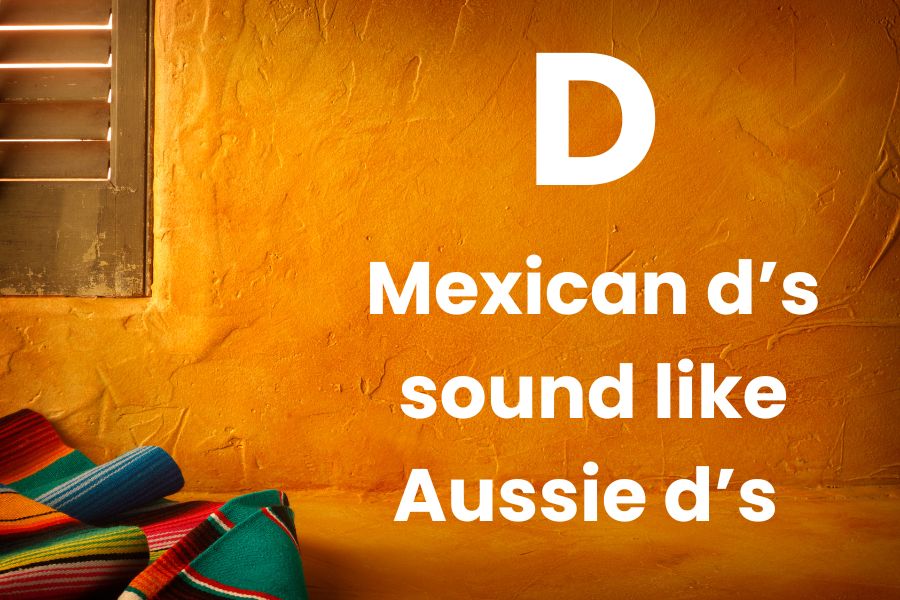
The pronunciation of “d” in Spanish depends on its position in a word and what sounds surround it. It can be strong or soft, and in some cases, it almost disappears in casual speech.
Strong “D” (Like English “D” in “dog”)
When “d” is at the beginning of a word or after “n” or “l”, it is pronounced like an English “d” (but softer).
🔊 Examples:
- Dónde → “d” sounds like English “d” in “dog.”
- Dos → “d” sounds clear and firm.
- Alrededor → “d” sounds strong because it follows “l”.
💡 Tip: Unlike English, Spanish “d” is pronounced with the tongue touching the upper teeth, not the ridge behind them.
Soft “D” (Like Soft English “Th” in “This”)
When “d” is between vowels, it becomes a softer sound, but in Mexico, it remains more pronounced than in Spain.
🔊 Examples in Mexican Spanish:
- Cada → Slightly softer, but still sounds like “cada,” not “catha.”
- Nada → “Nada” still sounds like “nada” (not “natha”).
- Cuidado → Soft, but the “d” is still present.
💡 Mexican Spanish does not soften “d” as much as Spain does. The “th” sound is less pronounced, and the “d” stays closer to an English “d.”