
On and Off, Open and Close Around the House
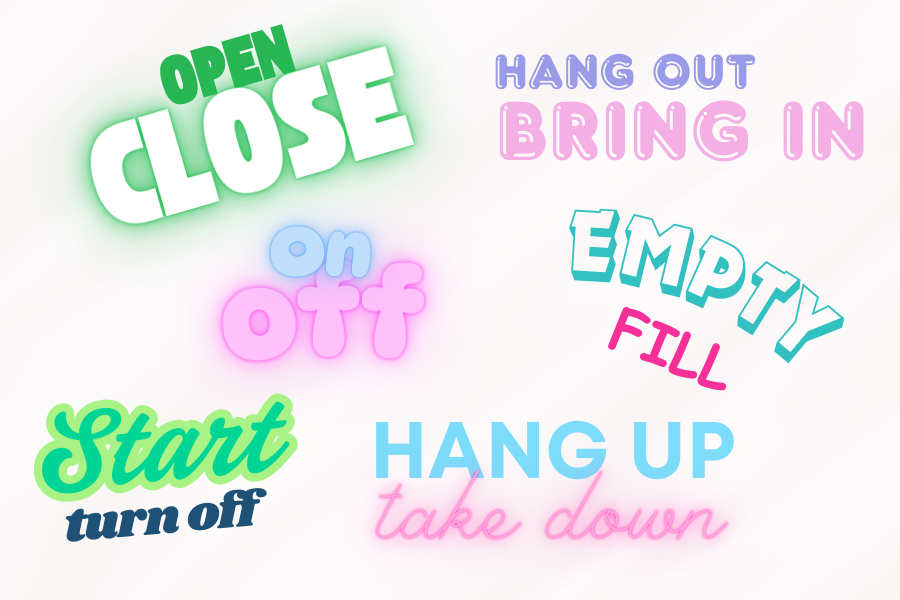
Abrir/Cerrar (Open/Close)

  • Abrir las cortinas / Cerrar las cortinas – (Open the curtains / Close the curtains)
  • Abrir la ventana / Cerrar la ventana – (Open the window / Close the window)
  • Abrir un cajón / Cerrar un cajón – (Open a drawer / Close a drawer)
  • Abrir la puerta de la despensa / Cerrar la puerta de la despensa – (Open the pantry door / Close the pantry door)
  • Abrir la puerta del horno / Cerrar la puerta del horno – (Open the oven door / Close the oven door)

Prender/Apagar (Turn On/Turn Off)

  • Prender la luz / Apagar la luz – (Turn on the light / Turn off the light)
  • Prender el ventilador / Apagar el ventilador – (Turn on the fan / Turn off the fan)
  • Prender la televisión / Apagar la televisión – (Turn on the TV / Turn off the TV)
  • Prender el aire acondicionado / Apagar el aire acondicionado –(Turn on the air conditioner / Turn off the air conditioner)
  • Abrir la ducha / Cerrar la ducha – (Turn on the shower / Turn off the shower)
  • Prender la lavadora / Apagar la lavadora – (Turn on the washing machine / Turn off the washing machine)

Prender/Apagar (Start/Turn Off – Appliances or Vehicles)

  • Prender el carro / Apagar el coche – (Start the car / Turn off the car)
  • Prender el lavavajillas / Apagar el lavavajillas – (Start the dishwasher / Turn off the dishwasher)
  • Prender la aspiradora / Apagar la aspiradora – (Start the vacuum cleaner / Turn off the vacuum cleaner)

Tender/Meter (Hang Out/Bring In)

  • Tender la ropa / Meter la ropa – (Hang out the laundry / Bring in the laundry)
  • Tender las toallas / Meter las toallas – (Hang out the towels / Bring in the towels)
  • Colgar un abrigo / Descolgar un abrigo – (Hang up a coat / Take down a coat)
  • Colgar las llaves en un gancho / Descolgar las llaves del gancho – (Hang up the keys on a hook / Take the keys off the hook)

Otras Acciones Cotidianas (Other Everyday Actions)

  • Cerrar la puerta con llave / Abrir la puerta con llave – (Lock the door / Unlock the door)
  • Conectar un cargador / Desconectar un cargador – (Plug in a charger / Unplug the charger)
  • Recoger el control remoto / Dejar el control remoto – (Pick up the remote / Put down the remote)
  • Llenar una botella de agua / Vaciar una botella de agua – (Fill up a water bottle / Empty a water bottle)
  • Echar/tirar algo a la basura / Sacar la basura – (Throw something in the bin/Take out the bin)
  • Limpiar el mostrador / Quitar el polvo del estante – (Wipe the counter / Dust the shelf)
  • Doblar la ropa / Desdoblar la ropa – (Fold the clothes / Unfold the clothes)
  • Destapar un frasco / Tapar un frasco – (Take the lid off a jar / Put the lid back on a jar)
  • “Prender la llave / Apagar la llave” – (Turn on the tap / Turn off the tap)

These are natural, everyday home actions — coats, keys, etc. Think hallway, hooks, and closets.

  1. I always hang up my coat when I get home.
  2. Can you take down your jacket from the chair?
  3. We hung the keys on the hook by the door.
  4. She took the apron off the hook before cooking.
  5. I forgot to hang up my towel after the shower.
  6. He took down his hat and went outside.
  7. I’m going to hang up the spare keys now.
  8. We took down all the coats before cleaning the closet.
  9. Please hang up your backpack where it belongs.
  10. I took the dog leash off the wall hook.

OPEN / CLOSE – Abrir / Cerrar

  1. Can you open the curtains?
  2. I always close the pantry door after cooking.
  3. Don’t forget to open the window in the morning.
  4. She closed the drawer too hard and it broke.
  5. I opened the oven to check the chicken.
  6. He closes the bathroom door every time he showers.
  7. I’m going to open the fridge and see what we have.
  8. We closed all the windows before going out.
  9. Please open the kitchen drawer — I need a spoon.
  10. I closed the door quietly so I wouldn’t wake her up.

Prender / Apagar

These 10 sentences reflect everyday home actions with electronics and appliances.

  1. Can you turn on the light?
  2. I turned off the fan before leaving the room.
  3. We always turn on the TV during dinner.
  4. She turned off the air conditioner because it was too cold.
  5. I’ll turn on the washing machine in an hour.
  6. He forgot to turn off the bathroom light again.
  7. I turned on the heater this morning — it was freezing!
  8. Please turn off the TV when you’re done.
  9. We turned on the living room lamp for extra light.
  10. They turned everything off before going to bed.

In Mexican Spanish, both prender and poner can mean “turn on,” but they are not interchangeable in all situations.

✅ Use PONER when:

  • You’re starting a thing that runs, plays, or performs a function (TV, music, washer, heater)
  • Think: “putting it on to run”

✅ Use PRENDER when:

  • You’re activating power, light, fire, or a switch
  • Think: “flipping something on” or “lighting it”

🧪 EXERCISE: 10 Sentences — One Correct Verb Only

Each of these sentences clearly leans only toward prender or poner. (No overlap.)

  1. Can you turn on the stove?
  2. I turned on the washing machine before leaving.
  3. Please turn on the light in the hallway.
  4. I put on some music while I cleaned.
  5. She turned on the burner to boil water.
  6. We always turn on the TV before dinner.
  7. He turned on the fan because it was hot.
  8. I’m going to turn on the heater — it’s freezing.
  9. They turned on all the candles.
  10. We’re going to put on a movie after dinner.

These sentences focus on laundry and towels — very natural in everyday household life.

  1. I need to hang out the clothes before it rains.
  2. Can you bring in the towels from the line?
  3. We hung the sheets out this morning.
  4. She always brings in the laundry before sunset.
  5. I’ll hang out the clothes after lunch.
  6. They forgot to bring in the towels last night.
  7. I’m going to hang out the laundry now.
  8. He brought in the clothes because it started raining.
  9. We usually hang the towels on the back fence.
  10. I brought everything in — nothing’s left outside.

Here are 10 everyday home sentences, focused on chargers, cables, and electronics.

  1. I need to plug in my phone — the battery’s dead.
  2. Can you unplug the charger from the wall?
  3. She plugged in the laptop to keep working.
  4. He forgot to unplug the toaster after breakfast.
  5. I always plug in my tablet at night.
  6. We unplugged everything before the storm.
  7. I’m going to plug in the speaker for music.
  8. Please unplug the fan before moving it.
  9. They plugged in the coffee maker this morning.
  10. I disconnected the lamp because it was flickering.

These are very common around the house, especially front doors, gates, and cars.

  1. I always lock the door before going to bed.
  2. Can you unlock the front door for me?
  3. She forgot to lock the car last night.
  4. He unlocked the gate and let the dog out.
  5. We locked the windows before leaving.
  6. I’m going to unlock the back door now.
  7. Please lock the garage when you’re done.
  8. They unlocked the house with a spare key.
  9. I locked the office and put the key away.
  10. Did you remember to unlock the gate?

These are great for everyday situations like water bottles, buckets, sinks, etc.

  1. I filled the water bottle before going out.
  2. Can you empty the trash can, please?
  3. She always fills the kettle in the morning.
  4. He emptied the bucket after cleaning.
  5. I’m going to fill the pitcher with juice.
  6. We emptied the sink and wiped it down.
  7. Please fill the dog’s water bowl.
  8. They emptied their suitcases after the trip.
  9. I filled a jar with leftover soup.
  10. You need to empty that container — it smells.

These are natural, everyday sentences involving garbage, leftovers, and cleanup.

  1. I threw the banana peel in the trash.
  2. Can you take out the garbage tonight?
  3. She always throws away empty containers.
  4. He took out the trash before work.
  5. I’m going to throw this in the bin.
  6. We took out the recycling this morning.
  7. Please don’t throw food scraps in the sink.
  8. They took out all the trash after the party.
  9. I threw the old sponge in the bin.
  10. You forgot to take out the garbage again!

These are common surface-cleaning actions in the kitchen, living room, etc.

  1. I wiped the kitchen counter after dinner.
  2. Can you dust the bookshelf today?
  3. She cleaned the bathroom sink this morning.
  4. He dusted the picture frames on the wall.
  5. I’m going to wipe the table before we eat.
  6. We dusted the TV stand and side tables.
  7. Please clean the stove after cooking.
  8. They dusted the shelves in the hallway.
  9. I wiped the windows with a cloth.
  10. You forgot to dust the top of the fridge.

These sentences cover handling clothes, towels, and linens — totally everyday stuff.

  1. I folded all the clean clothes last night.
  2. Can you unfold the blanket and lay it out?
  3. She folded the towels and put them away.
  4. He unfolded his shirt and ironed it.
  5. I’m going to fold the laundry now.
  6. We unfolded the picnic blanket at the park.
  7. Please fold the sheets before putting them in the closet.
  8. They unfolded their jackets and hung them up.
  9. I folded the baby clothes into little stacks.
  10. You left the towel unfolded on the bed again.

These are great for jars, containers, and kitchen prep.

  1. I took the lid off the peanut butter jar.
  2. Can you put the lid back on the salsa?
  3. She always taps the lid down tight.
  4. He took the lid off and smelled the contents.
  5. I’m going to open the jar now.
  6. We covered the jar to keep it fresh.
  7. Please take the lid off that container.
  8. They put the lid back on and shook the jar.
  9. I tapped the lid down and put it away.
  10. You forgot to close the jar properly.

La mañana ocupada

Eran las siete de la mañana, y la casa ya estaba ocupada.
María entró en la cocina y encendió la máquina de café.
Ella bostezó y dijo “No puedo empezar el día sin café.”
Su hermano, Luis, entró un momento después, también bostezando.

“María, ¿apagaste el ventilador en la sala anoche?” él preguntó.

“No, lo olvidé,” María admitió. “¿Puedes apagarlo ahora?”

Luis asintió y caminó a la sala.
Él apagó el ventilador y vio que las luces todavía estaban encendidas.
Los apagó también y murmuró “¿Alguien apaga alguna vez las cosas por aquí?”

Su padre entró y abrió la nevera.
“Luis, tráeme la leche, porfa,” él dijo.
Luis trajo la leche y la puso sobre el mostrador.

“No olvides cerrar la nevera,” María gritó.

Su padre sonrió. “Nunca me olvido. A diferencia de ustedes dos.“

Más tarde, María encendió la lavadora. Mientras se llenó con agua, ella dijo a Luis, “Cuando esta carga esté terminada, cuelgues la ropa afuera. ¿Puedes traerla adentro antes de la cena?”

The subjunctive mood is often used in requests because you may ask for something, but there’s no guarantee that it will be done and it definitely has not happened yet.
Subjunctive verbs above are italicised.

“Claro,” Luis dijo. “Pero solo si recuerdas apagar la lavadora esta vez!”

María se rió. “Recordaré, te lo prometo.“

Esa noche, su abuela los visitó. Abrió la puerta de la despensa y dijo: “Esta puerta no cierra bien. Tendrán ratones si no se repara!”

“Repararé mañana,” dijo papá.

“Abuelita, ¿quieres té?” María preguntó.

“Sí, lindo y fuerte, mi querida,” abuela dijo.

María llenó la tetera y la encendió.

bostezó – yawn

admitir – to admit

asintió – asenter; to nod

A diferencia de ustedes dos – unlike you two. Mexicans use “ustedes” for any group, regardless of formality.

cuelgues – colgar; hang out

te lo prometo – I promise