
La Isla
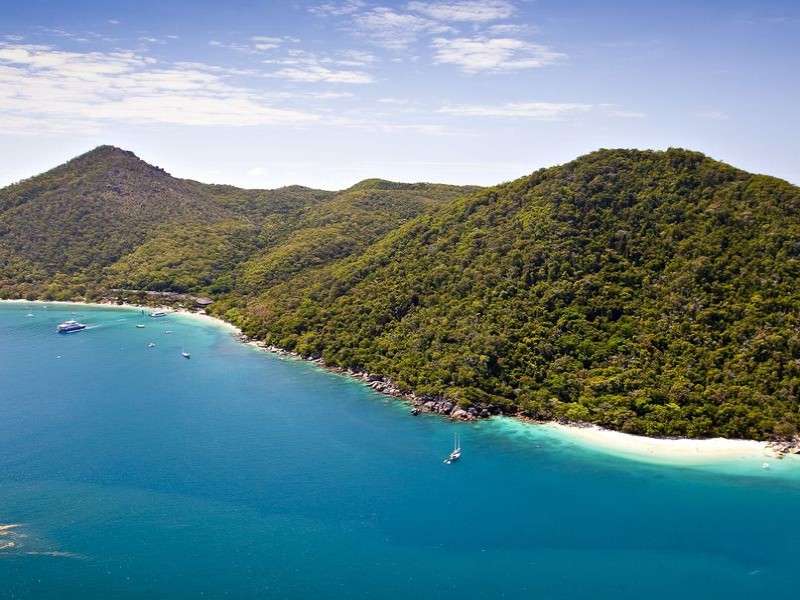
Cuando tenía nueve años, mi familia se mudó a una isla desierta por cuatro meses – ¡una historia verdadera! When I was nine years old, my family moved to a deserted island for four months – a true story.
Mi papá era pescador y mi familia vivía en un pueblo tropical en la costa de Queensland. El pueblo se llama Cairns y la Gran Barrera de Coral está en las aguas de su costa. My dad was a fisherman and my family lived in a tropical town on the coast of Queensland. The town was called Cairns and the Great Barrier Reef lay in the waters off its coast.
Un día, mi papá fue al bar a tomar una cerveza. Conoció a un hombre que necesitaba a alguien para vivir en su casa en una isla, mientras él ayudaba a sus padres en su granja. One day my dad went to the pub for a beer. He met a man who needed someone to live in his house on an island, while the man helped his parents on their farm.
En la isla no vivía nadie, excepto el farero y el cuidador de la isla. El hombre del bar era el cuidador. Sólo dos personas vivían en la isla. No one lived on the island except the lighthouse keeper and the island caretaker. The man from the bar was the island caretaker. Only two people lived on the island.
¡Mi papá dijo que sí! My dad said yes!
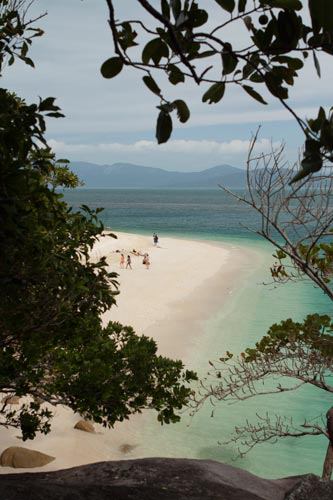
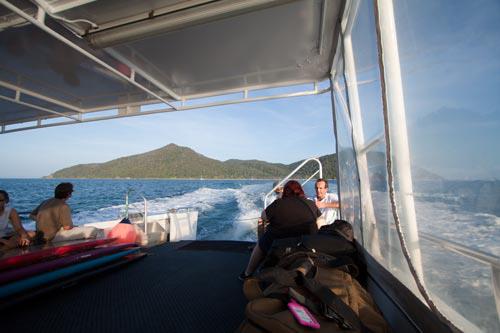
Entonces, mi mamá y sus tres hijos, mi hermana, mi hermanito y yo, nos subimos a un barco pequeño y nos mudamos a la Isla Fitzroy. So my mum and her three kids, my sister, my little brother and I, got on a small boat and moved to Fitzroy Island.
Mi mamá tenía veintinueve, mi hermana tenía ocho y mi hermanito tenía dieciocho meses. ¡Mi hermano era solo un bebé! My mum was twenty-nine, my sister was eight, and my little brother was eighteen months old. My brother was just a baby!
Ahora, cuando pienso en ese tiempo, veo lo valiente que fue mi mamá al llevar a tres niños pequeños a una isla desierta. Now, when I think back on that time, I see how brave my mum was to take three little kids to a deserted island.
Hoy, la Isla Fitzroy está a solo cuarenta minutos en barco desde Cairns. En aquel entonces, tomó cuatro horas con un barco lleno de muebles. Today, Fitzroy Island is a forty minute boat ride from Cairns. Back then, it took four hours with a boat full of furniture.
Cuando llegamos, no había un muelle (mweh-yeh) y remamos nuestras pertenencias hasta la playa. When we arrived, there was no jetty and we rowed our belongings to the beach.
Ese primer día, mi hermana vio un dragón y corrió hacia mi mamá gritando!. That first day, my sister saw a dragon and ran to my mum screaming!
El dragón era un lagarto grande, llamado goanna. ¡El goanna era tan grande como mi hermana! The dragon was a big lizard called a goanna. The goanna was as big as my sister!
La mayor parte de la isla era una colina alta y nuestra nueva casa era … ¡un cobertizo grande! Most of the island was a high hill and our new home was … a large shed!
En realidad, eran dos cobertizos unidos. Era del tamaño de una casita, con cocina, zona de dormir y sala de estar. In fact, it was two sheds put together. It was the size of a small house, with a kitchen, sleeping area and living room.
¡Me encantaba esa isla!
Tengo buenos recuerdos de dos canguros que vivían en la isla con nosotros; eran bastante mansos. Entraban al cobertizo para robar el azúcar de la despensa. ¡Tenían un diente dulce! I have good memories of two kangaroos that lived on the island with us; they were quite tame. They would come into the shed to steal sugar from the pantry. They had a sweet tooth!
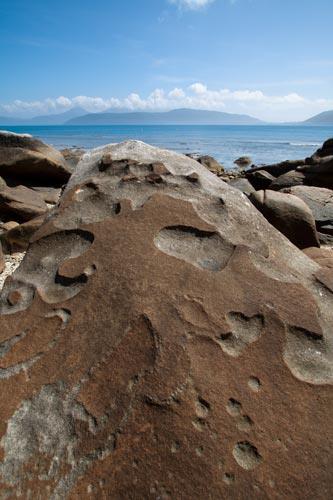
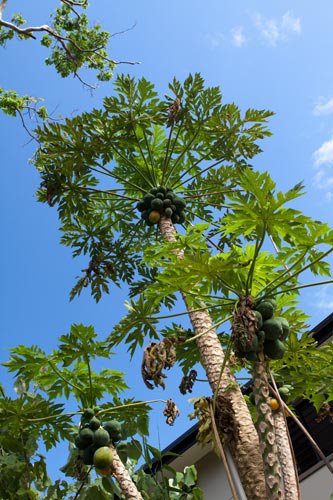
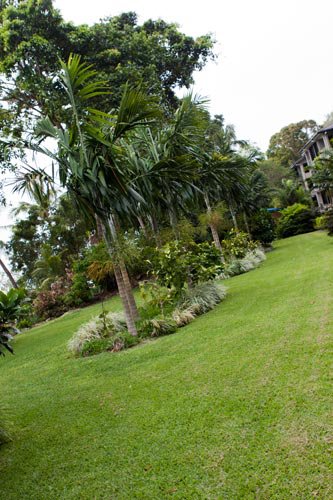
De niña, era una tomboy y me encantaba explorar. Mi perro pequeño y yo explorábamos las rocas gigantes en la playa, las piscinas de marea en los manglares, un gran patio con veintiséis árboles de coco, tres árboles de papaya y un árbol de guanábana (gwah-NAH-bah-nah). As a child, I was a tomboy and I loved to explore. My little dog and I explored the giant rocks on the beach, the tidal pools in the mangroves, a big backyard with 26 coconut trees, 3 pawpaw trees and one sour sop tree.
Una o dos veces, visitamos el faro, pero teníamos que subir una colina muy empinada. ¡Fue duro! Once or twice, we visited the lighthouse, but we had to climb a very steep hill. It was tough!
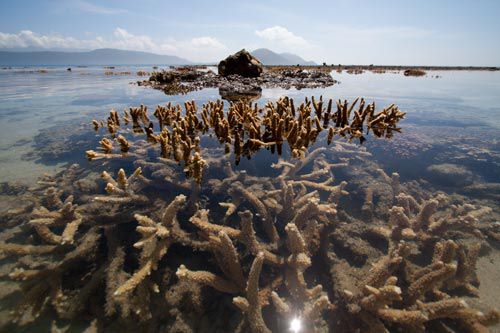
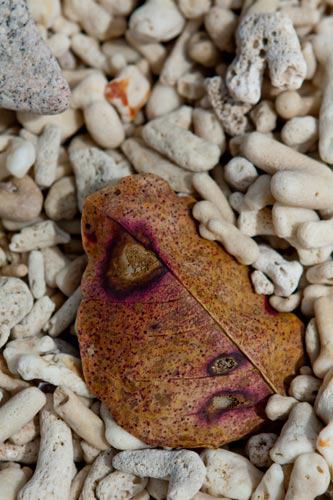
No había arena en la playa de la isla. Una estrella de mar mató gran parte del coral en el arrecife (ah-rreh-SEE-feh) alrededor (ahl-reh-deh-DOR) de la isla, y la playa estaba llena de corales muertos. There was no sand on the island’s beach. A starfish killed much of the coral on the reef around the island, and the beach was full of dead coral.
mudarse – “to move” in the sense of changing where you live
subir – “to get on” or “to board” a boat; “to go up” or “climb” a hill
En aquel entonces – “back then” or “at that time”
muelle – jetty, dock
remar – row, paddle
pertenencias – “belongings” or “possessions” ,comes from the verb “pertenecer”, which means “to belong”. So, pertenencias are the things that belong to you.
gritar – “to scream” or “to shout”
lagarto – lizard
cobertizo – shed
farero – lighthouse keeper
faro – lighthouse
cuidador – caretaker
piscinas de marea – tidal pools (pools of the tide)
marea (la) – tide; Marea alta: high tide / Marea baja: low tide
árbol de guanábana – sour sop tree
del tamaño – “de el tamaño” – the size of / of the size
canguro – kangaroo
manso/a – tame
despensa – pantry
estrella de mar – starfish (star of the sea)
el arrecife – reef
alrededor de – “around” (not “surround”), as in the area surrounding something.
If you wanted to say “surround” as a verb, you’d use “rodear”.
Example: El arrecife rodea la isla = The reef surrounds the island.
mató – comes from the verb “matar”, which means “to kill”.
Mató is the third person singular in the preterite tense:
- Mató = he/she/it killed or you (formal) killed (completed action in the past).
muertos – is related to “matar,” but it’s from the verb “morir” (to die), not matar (to kill).
- Muerto is the past participle of “morir”, meaning “dead” or “died.”
- Corales muertos = Dead coral (in this case, muertos agrees with corales because it’s plural and masculine).
Here’s how they are connected:
- Matar = to kill (an action done by someone or something)
- Morir = to die (the act of dying, more passive)
- Matar (to kill) refers to the act of causing death.
- Él mató al dragón. = He killed the dragon.
- Morir (to die) refers to the act of death itself.
- El dragón murió. = The dragon died.