
Un metrobus ocupado
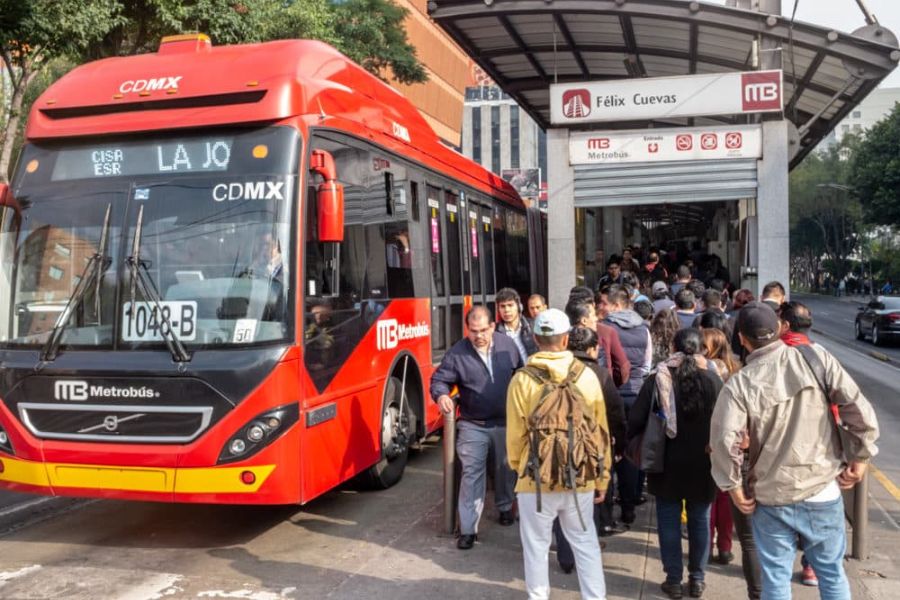
Use photo as prompt for writing.
Un metrobus ocupado
Hay mucha gente en esta estación de metrobús.
Quería (imperfect) saber sobre los autobuses de la Ciudad de México entonces hice alguna investigación.
- when you’re talking about a general desire or intention (I wanted to learn about a topic), imperfect is the default.
- It frames it as background motivation, not a one-time event.
En México los autobuses de barrio se llaman camiones.
Hay camiones en los suburbios que te llevan a un punto central de la calle principal.
Los metrobuses, como el autobús en la foto, van hacia la ciudad y tienen menos paradas.
Mucha gente está subiendo al metrobús y mucha gente está bajando del metrobús también.
- subir a → shows movement onto / toward something.
Subir al (a el) metrobús = get on the bus. - bajar de → shows movement down / off / away from something.
Bajar del (de el) metrobús = get off the bus.
Creo que todos trabajan en la ciudad.
Si una persona vive en las afueras de la ciudad, tomaría un camión en su barrio que tendría muchas paradas en el camino.
- Type of sentence: This is a real conditional sentence
- Si-clause (condition): Si una persona vive en las afueras de la ciudad…
- Present indicative (vive) states the condition as possible or general.
- Main clause (result): …tomaría un camión en su barrio…
- Conditional (tomaría) expresses what would happen if that condition is true.
- Pattern: Si + present indicative → conditional to show a likely or habitual cause-and-effect.
El camión lleva a una parada de metrobús, y el metrobús lleva a la persona a la ciudad.
Puedo ver que el autobús en la foto tiene una segunda parte, así que el autobús es el doble de largo y puede llevar el doble de personas.
- el doble de largo → twice as long / double the length
- el doble de personas → twice as many people / double the people
En Perth llamamos este tipo de autobús un autobús de ‘link’.
Me pregunto cómo se llama en CDMX.
Estaría asustada de tomar el Metrobús porque está muy ocupado y podría perderme.
- Type of sentence: Implicit conditional — the if part is not stated but understood (e.g. Si tuviera que tomar el Metrobús…).
- Conditional verbs:
- Estaría (I would be) → conditional of estar, expressing a hypothetical emotional state.
- Podría (I could / might) → conditional of poder, expressing potential ability or possibility.
- Function: Both verbs describe what would happen under an implied condition (if you had to take the Metrobús).
- Pattern: Conditional tense = infinitive + -ía endings to show hypothetical result or polite/softened statement.
Pero me gustaría tomar un camión para descubrir el barrio donde voy a quedarme en CDMX.
- Type of sentence: Polite / hypothetical desire, not a full si clause but still conditional.
- Conditional verb: Me gustaría (I would like) → conditional of gustar.
- Function: Expresses a wish or preference in a soft, hypothetical way (what you’d like to do, not what you’re doing).
- Pattern: Conditional tense = gustar + -ía ending → shows potential or polite intent rather than a definite plan.
hacia la ciudad – into the city
subiendo (gerund) – subir; to go up / climb / ascend / rise / upload—depending on context
bajando (gerund) – bajar; to go down / come down / lower / decrease.
las afueras de la ciudad – outskirts of the city
el doble de – double the / twice the