La Pelota de Voleibol

La Pelota de voleibol

Es el fin del día.

El sol está bajo en el cielo.

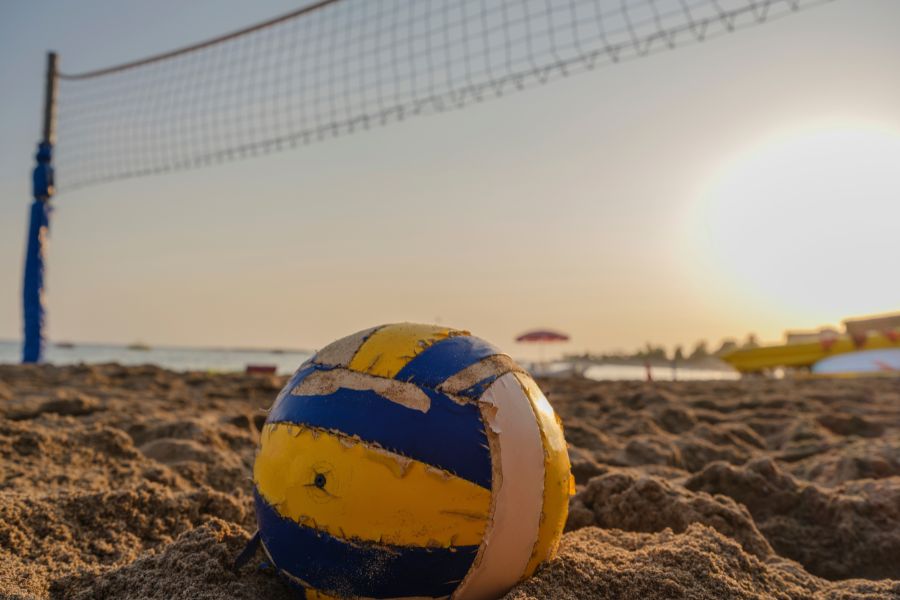
Una pelota sola descansa encima de la arena, debajo de una red de voleibol en la playa.

La gente se ha ido a casa; la playa está desierta y tranquila.

En el fondo, el mar también está tranquilo, y el sol es una luz grande y brillante cerca del horizonte.

Hay una sombrilla solitaria y roja a lo lejos, detrás de la pelota.

Creo que todavía hace calor al final del día, porque la luz del sol es suave y tibia.

Pero esta pobre pelota… ha visto muchos días y muchos juegos de voleibol.

Está entera, pero hecha jirones.
(See ‘hecha’ as an adjective here.)

Tiene segmentos de azul, amarillo y blanco. Cada segmento está desgastado.

Y debajo de los colores, la pelota desnuda es color marfil y está sucia.

Esta pelota es amada.

La gente volverá mañana y jugará otra vez.

se ha ido – has left (reflexive past perfect, third-person singular)

sombrilla – beach umbrella

a lo lejos – in the distance

tibia – means warm, but not hot—a gentle, mild warmth.

Tibia means warm, but not hot—a gentle, mild warmth.

SpanishEnglish
calientehot (high temperature)
tibiawarm (mildly warm)
templadalukewarm / room temperature (depends on context)
fríacold

💡 Key point: Tibia is softer than caliente, but definitely warmer than templada.


🌡️ How is “tibia” used?

It’s most commonly used for water, weather, skin, or light—anything with a gentle heat.

✅ For water & liquids:

  • El agua está tibia.
    (The water is warm.) (Not hot, not cold—just nice.)
  • Me gusta tomar leche tibia antes de dormir.
    (I like to drink warm milk before bed.)

💡 If water is hot (like for tea), you’d say “caliente.”


✅ For the sun & air:

  • El viento es tibio hoy.
    (The wind is warm today.) (A pleasant, soft warmth.)
  • La luz del sol es tibia a esta hora.
    (The sunlight is warm at this hour.) (Not burning, just gentle.)

💡 If the sun is HOT, you’d say “hace calor” or “el sol es fuerte.”


✅ For skin & body temperature:

  • Sus manos estaban tibias.
    (Her hands were warm.) (Comfortably warm, not sweaty-hot.)
  • Tengo fiebre, pero solo estoy tibia.
    (I have a fever, but I’m only a little warm.) (Not burning up.)

💡 If skin is HOT (like a fever), you’d say “está ardiendo” or “está muy caliente.”


✅ For emotions & reactions (figurative use!):

  • Su reacción fue tibia.
    (His reaction was lukewarm.)
  • La comida estuvo buena, pero la música fue tibia.
    (The food was great, but the music was meh.)

💡 When used figuratively, “tibio/tibia” means “unenthusiastic, indifferent, not very strong.”

Esta pobre pelota – (This poor ball…)
Here, “pobre” before the noun = affection, sympathy, or emotional weight.
You’re not just describing a ball that lacks money or value — you’re saying:
“Aww, this poor little thing, it’s been through a lot.”

entera – whole

desgastado = worn out, faded, worn down

desnuda – bare, naked

marfil – ivory
“es color marfil” is common phrasing for describing color tone